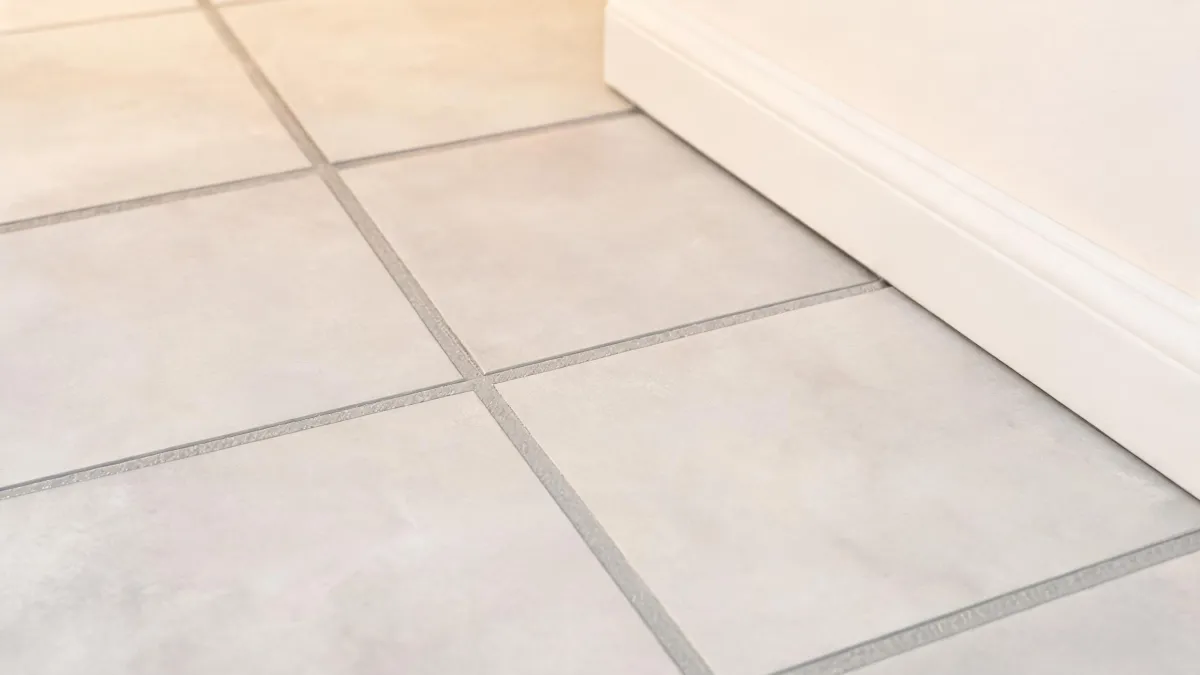
When I took over purchasing for a 120-person building materials distributor in 2020, I brought exactly one strategy with me: get three quotes and take the lowest one. It sounded disciplined. Within a year, that habit turned a $0.94/sq ft saving on 18,000 sq ft of porcelain tile into a two-month delay, a canceled order, and pallets that sat in our warehouse for eight months. The tile was cheap on paper. On the floor, it was expensive.
I'm an office administrator by title, but for the last six years my real job has been buying. I manage roughly 60–80 purchase orders a year across eight vendor categories for a distributor that serves contractors and other wholesale buyers. Our stock list includes Marazzi tile and setting materials, brick veneer, masonry products, and a growing mosaic tile private label program. I've bought the same product from five different sources in one year—and I've made enough invoice mistakes to know what actually matters.
This article is a porcelain tile distributor buying guide of sorts, but not the usual kind that compares one brand's catalog to another's. I want to compare two buying models: quote-driven spot buying and program buying with fewer, deeper manufacturers. The first model looks cheaper. In my experience, it usually isn't.
Two ways to fill a warehouse
Spot buying means every order goes out to three or four suppliers, and the lowest quote wins. The purchaser treats each lot of tile, adhesive, mortar, or brick veneer as an independent transaction. On paper, that maximizes competition. In practice, it also maximizes variation—different factories, different batch codes, different technical documents, and no single person responsible when something doesn't line up.
Program buying works differently. You choose a smaller group of manufacturers and give each one a larger share of your volume, usually across more than one product category. A good example at our company is Marazzi. We stock Marazzi tile for floors, specify a washroom wall line like Marazzi Rice wall tile, and buy compatible setting materials from the same supplier. That's not loyalty out of affection. It means one technical contact, one set of batch records, and fewer surprises.
The first comparison: the price that isn't the price
The classic case for spot buying is unit price. Let me give you a real one. In early 2021, we quoted 18,000 sq ft of glazed porcelain tile. The low bid came in at $1.18/sq ft under our current program price. That's a difference of about $21,240 on paper. The vendor promised a three-week lead time. At week five, they told us production hadn't started. At week eight, the contractor canceled the order and bought from someone who actually had stock. We were left with fourteen pallets that eventually moved at a 22% discount to a property manager we'd rather not have discounted for.
That story isn't unusual. The kicker is that we never recovered the $21,000 of paper savings—or the freight we paid on the original delivery. But the follow-up costs aren't always that dramatic. Sometimes it's a missing packing list that holds up receiving for an hour. Sometimes it's a rebill accounting has to chase. The “always get three quotes” advice ignores all of that. It treats the supplier as free to execute the purchase, when executing the purchase is actually most of the work.
The best quote is the one that can become a clean purchase order, a clean invoice, and a delivery that shows up when promised. Unit price is only the first line of that calculation. That $0.94 saving wasn't a saving. It was tuition.
The second comparison: tile has to repeat itself
A porcelain tile distributor doesn't sell color. You sell a specification—and specifications have tolerances. Porcelain tile, for example, is generally classified under ISO 13006 as Group BIa, with water absorption of 0.5% or less. In North America, buyers often point to ANSI A137.1 for physical requirements. If a supplier can't tell you which standard their product was tested to, that's a red flag.
My rule now: if a supplier can't state the test standard, assume the product hasn't been tested.
Here's why that matters on a shelf, not just in a spec book. When an architect or a contractor buys Marazzi Rice wall tile in phase one and comes back for phase two, the second lot needs to look like the first. The same goes for floor tile, mosaics, even brick veneer. Shade variation is normal in ceramics, but a reputable manufacturer controls it, documents it, and can tell you which batch went where.
Spot buying breaks that chain. A low-quote broker might source the same product name from a different factory on the next order. The catalog photo looks identical, the price is tempting, and then the customer gets a shipment that doesn't match what they installed last month. The redo cost lands on you, the distributor, because you're the one who sold it.
That inconsistency is the second hidden cost of the lowest-bid model. Cheap lots aren't just risky on arrival; they're risky on reorder. For that reason, the unit price conversation almost never captures what the product will cost you over a year of selling it.
The third comparison: private label turns every supplier into a brand decision
This is the comparison most distributor buying guides skip. At some point, a distributor stops reselling other brands and starts putting its own name on product. We launched our own mosaic tile private label line in 2024, and it changed how I evaluate suppliers entirely.
When your logo is on the box, you own the product's promises. If a mosaic sheet delaminates, if the mesh backing melts in the sun, if the color doesn't match the sample board you handed out—your company gets the phone call. That means the person behind the private label has to be more than someone who can find a cheap pallet. They need traceability, quality documents, and a process that will still exist next year.
Traders can provide some of that. I've worked with honest ones who run excellent programs. But as your private label grows, you need factory visibility, not just a good email relationship. You need to know which plant produced what, under which standard, with what kind of batch control.
The same logic applies outside tile. When a general contractor asks who our brick veneer manufacturer is, I want a specific answer: a real facility, a real technical contact, a real quality process. If the only answer is “our source in another country,” that uncertainty eventually becomes a cost. It might come back as a rejected shipment, a warranty dispute, or a customer who quietly takes their business elsewhere.
So the third comparison isn't really about unit price at all. It's about risk. Spot buying transfers risk to the buyer. Program buying shares it with a manufacturer who has more control over the outcome.
So which model should you use?
I still use spot buying sometimes. It's the right tool when I'm testing a new product category, covering a one-off contractor request, or filling a small gap after a shortage. But it's no longer my default for core SKUs—especially porcelain tile, wall tile, and anything with our private label on it.
Choose program buying when:
- You stock the same product repeatedly and need consistent shade, size, and packaging.
- You carry a private label line or plan to launch one.
- You sell to contractors who hold you responsible for delivery dates and product quality.
- You want technical support that goes beyond “send us a photo.”
Stick with spot buying when you genuinely need a specialty item, a very small quantity, or a stopgap delivery. Just don't pretend those spots are where most of your costs hide.
One honest caveat: I don't have hard industry-wide data on how often low-bid orders fail, because nobody publishes that. What I can tell you anecdotally is that our expensive mistakes almost always came from the newest supplier with the lowest price, not from the manufacturers we knew well. My sample is regional distribution. If you're sourcing for a huge national program, your numbers might differ. But the principle probably won't.
Value over price isn't a slogan. It just means measuring the whole system, not the first line of the quote. A manufacturer that can deliver a clean order today, match the shade next year, and stand behind a private label program has a price advantage you can't see on the invoice. That's the kind of cost I've learned to buy on.