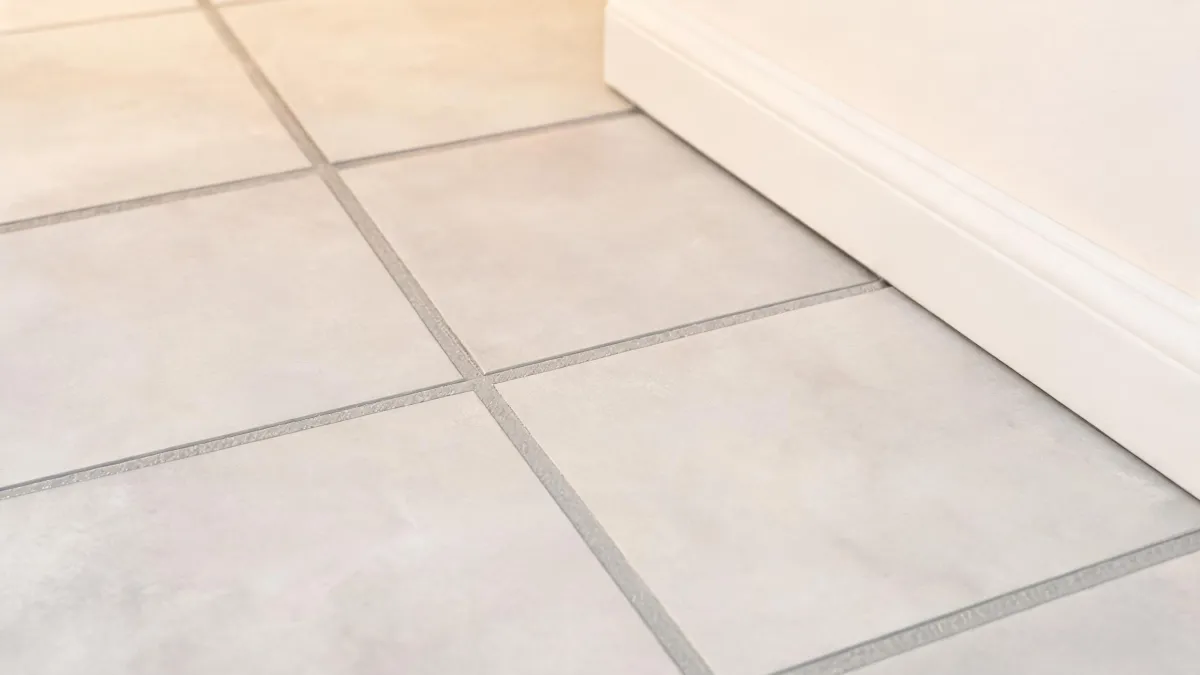
Most tile failures I've seen don't happen during installation. They happen three weeks earlier, when someone approved a supplier based on a catalog and a price sheet.
I work as a quality and brand compliance manager for a mid-size building materials distributor. I review incoming shipments — porcelain tile, brick veneer, concrete blocks, the occasional pallet of mortar — and I sign off before anything gets listed for sale or sent to a job site. Over roughly six years I've rejected maybe 15–18% of first deliveries. Not because the materials were bad, but because they didn't match what was promised.
This checklist is for specifiers, contractors, and purchasing managers evaluating a new porcelain tile supplier — or re-evaluating an existing one. It works for brick veneer and concrete block suppliers too. Nine points, in the order I actually use them.
1. Ask for batch-linked test reports, not generic certificates
Every serious vendor has a folder full of certificates. What matters is whether those certificates connect to the specific batch you're buying.
Ask for the report number, the production date, and the batch code stamped on the tile or block itself. If the vendor says "all our product meets the same standard," that's a red flag. Standards are met per batch. Batches drift.
What most people don't realize is that many suppliers keep a single "master" test report for each product line and recycle it for years. A 2022 report doesn't tell you anything about a 2025 batch.
2. Check three tile consistency metrics — not just the one on the box
Porcelain tile is sold with a PEI rating, a shade number, and a caliber (size) code. All three matter, and only the first one gets checked by most buyers.
- Shade: Even from the same Marazzi tile line, shade variations between batches can be visible. Mix batch codes within one order and you'll see the seams.
- Caliber: Tiles from different calibers can differ by 1–2mm. That's enough to break a tight grout line on a large-format install.
- PEI / abrasion: A PEI 3 tile in a commercial lobby will wear through in 18 months. Check the actual application.
I want to say our rejection rate for shade mismatch was around 7% one quarter — though I might be misremembering the exact figure. But it's high enough that we now require mixed-batch photos before any large order ships.
3. Re-check brick veneer specifications against the physical sample
Brick veneer specifications are simple to read and easy to skim past. Don't. The three things I check physically:
- Nominal thickness (typically 1/2" to 5/8" for thin veneer; full veneer varies). Measure it. Don't assume.
- Water absorption rate. High-absorption veneer in a freeze-thaw climate is a callback waiting to happen.
- Compressive strength. ASTM C216 covers this; ask for the number, not the claim.
In 2023 we received a batch of 320 square feet of veneer where the actual thickness was 3–4mm under spec. The vendor said it was "within industry tolerance." ASTM C216 doesn't have that tolerance. We rejected it, they refunded, and now every brick veneer PO includes a physical-measurement clause.
4. Vet concrete block suppliers on a different track than tile suppliers
Many concrete blocks suppliers also sell tile, and vice versa. That doesn't mean the same QC applies.
Blocks are heavier, cheaper per unit, and more sensitive to moisture content at delivery. Ask:
- Minimum 28-day compressive strength (ASTM C90 for load-bearing, C129 for non-load-bearing)
- Moisture content at shipping — wet blocks crack in cold weather
- Curing method — steam-cured is more consistent than yard-cured, especially in humid regions
Cost per block is the least useful metric. The blocks that fail on-site cost 3–5x what they cost to buy.
5. Confirm packaging standards before you need them
Roughly 30% of my rejected first deliveries are damage claims, not quality claims. Corners cracked, edges chipped, pallets shifted in transit. Almost all of this is predictable and preventable.
Ask for a photo of how the shipment will actually be packed:
- Corner protection present on every visible corner?
- Cardboard or foam between rows, or tile-on-tile?
- Forklift-accessible pallet base, or will they need to be broken down first?
- Moisture-wrap for shipments crossing humidity gradients?
If a supplier won't send you packaging photos, that's your answer. The honest ones have them on file.
6. Ask about inventory depth in the last 90 days — not factory capacity
Factory capacity is a sales number. Inventory is an operational reality.
Ask: "How many square feet of [specific SKU] have you actually had in stock continuously over the last 90 days?" If the answer is vague, the item is a special order. Special orders come with longer lead times, higher minimum quantities, and less recourse if something goes wrong.
From the outside, it looks like a supplier with a huge factory can handle any order. The reality is that factories run to schedule, not to your schedule.
7. Get the claim and return process in writing before the first order
Every supplier will handle a claim well when it's a $200 issue. Test them on paper for what happens on a $20,000 issue.
Written confirmation should cover:
- Who decides if a batch fails inspection — you, them, or a third party?
- Who pays return freight?
- Timeline for replacement batches
- Whether credit or replacement is the default remedy
If they won't put it in writing, they're planning to negotiate later. You should plan accordingly.
8. Ask for project-specific references — not logos on a slide
"We've supplied half the malls in the country" is not a reference. A reference is: "We supplied 40,000 sq ft of Marazzi tile to a Sussex countertop and tile retailer for a mixed-use renovation in Q2 2024, and here's what went wrong and how we handled it."
Ask for a project that was difficult. Ask what they'd do differently. Anyone can talk about success; the good suppliers talk about recovery.
9. Run a blind first delivery
This is the step most buyers skip, and it's the one that catches the most.
For the first order, don't tell the warehouse which vendor it's from. Ask the receiving team to inspect it using your standard checklist without knowing the source. Compare that report to what the vendor claimed in their spec sheet.
Buyers have biases. If your team knows it's from a "premium" vendor, they'll find fewer problems. Blind inspection costs you nothing and gives you real data.
What usually goes wrong
Three patterns cause most of the failures I've seen:
- Skipping step 6 because of relationship loyalty. "We've used them for years" is a reason to keep using them — after you've verified the current batch.
- Comparing unit price only. Landed cost — including rejection risk, rework, and freight — is what matters. A 6% cheaper tile that fails 10% of the time is more expensive.
- Not documenting the first call. When a batch is rejected, the vendor's first question is "did you tell us these specs before you ordered?" If you can't answer that with a timestamped email, you're negotiating from behind.
Saved $400 by choosing a "close enough" batch once. Cost us about $3,200 to redo a customer installation and replace the tiles. That's the last time we skipped step 2.
None of these steps take more than half an hour combined on the front end. The alternative is finding out about them during installation. Five minutes of verification beats five days of correction — every time.