Why the Best KONE Elevator Repair Is the One You Never Need
After handling 400+ KONE emergency service calls, I've learned the hard way that most emergencies are preventable. Here's what the data—and a 12-point checklist—actually change.

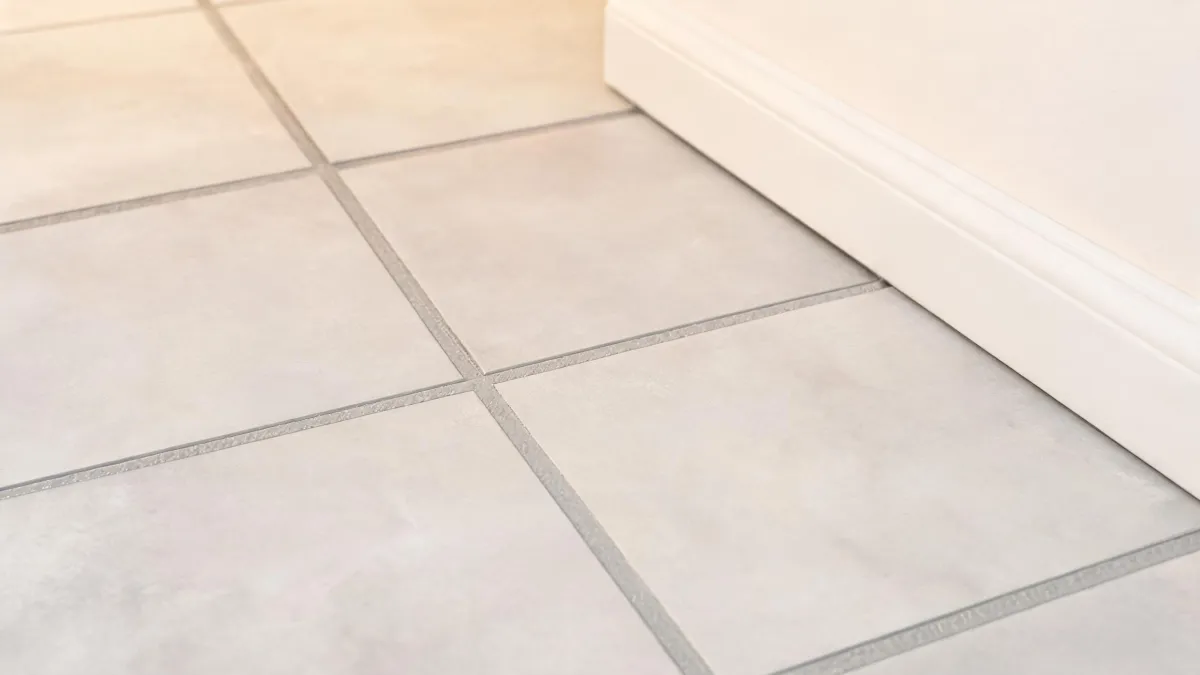
I've been handling commercial tile and building material orders for 9 years. I've personally made (and documented) 11 significant mistakes, totaling roughly $27,000 in wasted budget. Now I maintain our team's checklist to prevent others from repeating my errors.
A lot of buyers frame this as Marazzi tile vs. generic tile, or OEM vs. spot buy. I don't think that's the real comparison. The real comparison is lowest quoted price vs. total landed value. That's what this commercial tile distributor buying guide compares. Same four dimensions: upfront quote, spec fidelity, supply-chain communication, and risk/after-sale. I'll tell you when low bid wins, and when it's a red flag.
One thing before we start: I'm not saying every project needs Marazzi. I'm not saying every project needs the cheapest option either. The answer depends on what happens after the quote is signed.
Lowest quote: looks great on the purchase order. The number is small. The approval is easy. Value option: looks worse up front, but includes freight, breakage allowance, batch consistency, and return terms.
In my first year (2017), I made the classic mistake. I ordered 1,200 sq ft of 24x24 concrete-look tile from a low-bid supplier because the quote was 18% lower than our usual source. It looked fine on my screen. The result came back with 7% breakage, two visibly different dye lots, and a freight bill that erased most of the savings. We had to redo one lobby section. That error cost $890 in redo plus a 1-week delay. On a $3,200 order, the cheap quote was not cheap.
I knew I should get written confirmation on the dye lot and breakage allowance, but thought 'what are the odds?' Well, the odds caught up with me. That's when I learned to ask for the landed cost, not just the unit price.
Compare conclusion: For commodity masonry brick on a garden wall where shade variation does not matter, the lowest quote can win. For Marazzi tile or any visible commercial surface, landed cost usually wins. Seriously, calculate freight, breakage, returns, and labor before you celebrate a low price.
Lowest quote: often means 'similar' tile, generic mortar, and a batch number you cannot trace. Value option: means Marazzi tile collections with controlled shade variation, plus mortar mix OEM that actually matches the tile.
If you're buying Marazzi Moroccan Concrete 24x24, you're not just buying a tile. You're buying a visual result. The pattern repeat, edge rectification, and shade movement are part of the design. A generic 24x24 concrete-look tile may look similar in a photo and completely different in a 5,000 sq ft lobby.
I once said 'standard size' when ordering. They heard 'whatever is close.' We discovered the mismatch when the order arrived and nothing fit our existing materials. Same words, different meanings. That was a communication failure, not a manufacturing failure.
The same thing happens with mortar mix OEM. If you are doing private label or OEM mortar, the formula has to match tile size, absorption, substrate, and climate. I once ordered 40 bags of low-bid OEM mortar for large-format tile in September 2022. We caught the issue when tiles started sliding during installation. The wrong mortar on 40 bags = $450 wasted plus embarrassment in front of the installer. Now I approve an OEM formula sample before any bulk run.
Per FTC Business Guidance on Advertising (accessed April 2026), claims must be truthful and not misleading, and advertisers must have evidence to back them up. Source: ftc.gov/business-guidance/advertising-marketing
So when a supplier says 'premium,' 'commercial grade,' or 'recycled' without test data, that's a red flag. At least, that's been my experience with building material sourcing.
Compare conclusion: For a back-of-house utility area, 'close enough' can be fine. For a client-facing space with Marazzi Moroccan Concrete 24x24, spec fidelity is usually the no-brainer choice. The savings per square foot are tiny compared with the cost of a failed visual inspection.
Lowest quote: often comes from a broker with no inventory, no technical support, and no ability to run a private-label program. Value option: looks more like a commercial tile distributor with direct Marazzi access, mortar mix OEM capability, and real relationships with a masonry brick manufacturer.
I said 'as soon as possible.' They heard 'whenever convenient.' Result: delivery two weeks later than I expected. No one lied. We just used the same words with different calendars. That was the communication failure that made me put every lead time in writing with a specific date and a buffer.
I've also weighed the classic trade-off: the upside was $2,000 in savings. The risk was missing a client deadline. I kept asking myself: is $2,000 worth potentially losing the client? The worst case was a complete redo at $3,500. The best case was saving $800 after freight. The expected value said go for it, but the downside felt catastrophic. I went with the value supplier. That decision protected the schedule, and I still remember the relief.
For mortar mix OEM and private label, communication is a deal-breaker. You need MOQ, batch consistency, packaging approval, lead time, and a named technical contact. If you are sourcing from a masonry brick manufacturer, ask for batch reports and color consistency data. If they cannot provide it, that is not a small issue.
Compare conclusion: If you only need a one-time spot buy, a broker can work. If you need an ongoing commercial tile distributor relationship, OEM mortar, or private-label masonry brick, the lowest quote is usually the wrong tool.
Lowest quote: when something goes wrong, you may find out how little leverage you have. Value option: costs more up front, but has a documented claim process and people who answer the phone.
I want to say we've caught 47 potential errors using our pre-check list in the past 18 months, but don't quote me on the exact number. The point is that most expensive mistakes are visible before the order ships. Wrong shade. Wrong size. Wrong mortar. Missing batch report. Unclear freight terms.
If a supplier says these materials are suitable for every application, or promises no cracking, fading, or staining, treat that as a red flag, not a selling point. No responsible building material supplier should promise that. Per FTC advertising guidelines, claims need evidence. Per FTC Green Guides (16 CFR Part 260, accessed April 2026), environmental claims like 'recyclable' also need substantiation. Source: ftc.gov/green-guides
The best part of finally getting our vendor process systematized: no more 3am worry sessions about whether the order will arrive correct. There's something satisfying about a perfectly executed rush order. After all the stress and coordination, seeing it delivered on time and correct, that's the payoff.
Compare conclusion: Low bid can be acceptable when the downside is small. For Marazzi tile, mortar mix OEM, or masonry brick in a revenue-generating project, after-sale risk belongs in the decision.
Choose the lowest quote when: the budget is a hard cap, the area is non-critical, the installation is temporary, the masonry brick is standard, you can accept shade variation, and you do not need OEM or private label. In that case, a low quote is not automatically a mistake.
Choose the value option when: the project is commercial, the design depends on Marazzi tile, you are specifying Marazzi Moroccan Concrete 24x24, you need mortar mix OEM, you want a private-label program, or you need a masonry brick manufacturer with consistent batch quality. In those cases, the lowest quote is often just the start of a more expensive story.
My view is simple: price is one number. Total cost is the real number. That $200 savings turned into a $1,500 problem when the wrong batch arrived and the install crew was standing around. I've seen it happen enough times that I no longer treat the cheapest quote as a victory by itself.
Before you approve any order, run this checklist: confirm dye lot, confirm size in inches and millimeters, confirm breakage allowance, confirm freight terms, confirm lead time with a buffer, approve an OEM formula sample, request batch reports, and read the claim process. Then decide.
Bottom line: don't let the lowest quote make the decision for you. Put another way, the cheapest quote is not a strategy. It's a starting point. For a commercial tile distributor buying guide, the better question is not 'Who is cheapest?' but 'Who is still there when the order goes wrong?'

Warren Hughes is a building-envelope analyst specializing in windows, exterior doors, siding, cladding, architectural glass, curtain walls, storefronts, anchors, gaskets, and perimeter seals. He applies ASTM E283/E283M, ASTM E330/E330M, and ASTM E331 to their respective air-leakage, structural, and water-penetration evaluations while tracking pressure differential, deflection, leakage rate, drainage, glass make-up, and anchorage. His field-oriented guides help architects, façade contractors, and developers define mock-up tests, interface details, acceptance limits, and remedial priorities before enclosure closeout.