Why the Best KONE Elevator Repair Is the One You Never Need
After handling 400+ KONE emergency service calls, I've learned the hard way that most emergencies are preventable. Here's what the data—and a 12-point checklist—actually change.

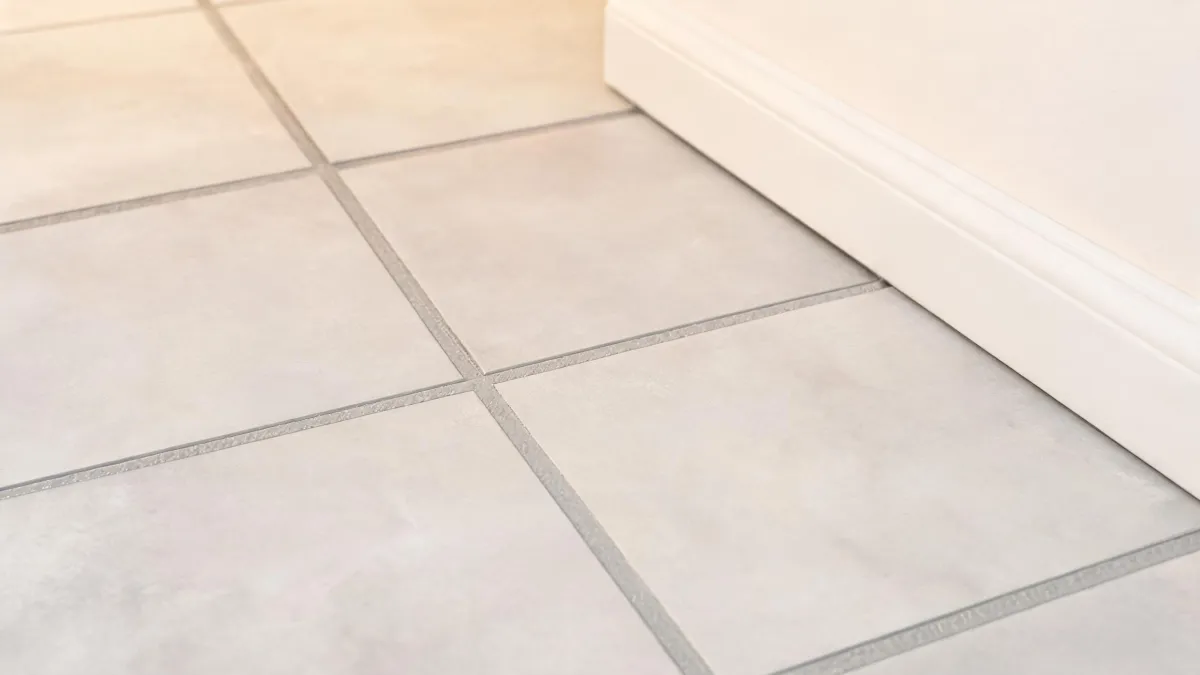
If the tile is going anywhere a client will see it, don't cheap out on marble-look porcelain. Specify Daltile marble look tile—and if you need a black-and-white statement floor, look hard at Broadway Black Quartz from Daltile. The price gap feels painful on the quote. It's nothing compared to the cost of a do-over.
I know this because I chose the budget option once. That decision cost my team $2,400 in rework, three days of lost schedule, and a client who now asks to see every material sample before we order. That was in 2022. I still have the photos on my phone.
I'm a tile procurement coordinator. I've handled commercial and residential tile orders for 7 years. I've personally made and documented about 14 significant mistakes, totaling roughly $11,000 in wasted budget across that time. I now maintain the checklist our team uses before any order goes out. The marble-look tile disaster is mistake #6 on that list.
Here's the thing: I'm not a Daltile salesperson. I don't get a commission. I'm the person who has to explain to a project manager why the floor they approved three months ago now looks like a printed sheet of paper with grout lines. That person was me in September 2022, and I'd rather not be that person again.
We were doing a small hotel lobby refresh—about 1,800 square feet of floor. Budget was tight. I sourced a marble-look porcelain from an overseas supplier at roughly 40% less per square foot than the Daltile marble look line I'd originally quoted. It looked fine in the showroom sample. The print was convincing. The client approved it.
We installed it in October 2022. By January, the problems were obvious. The printed pattern had worn through on the high-traffic path from the entrance to the front desk—you could see the base clay color underneath. The edge glazing on maybe 30 pieces had chipped during a routine floor buffer pass. And the grout was already discoloring in ways that made the whole floor look dirty even after a deep clean.
The client noticed before we did. That's the worst version of this story.
We replaced the entire floor with Daltile's marble-look porcelain—not the same pattern, because the client had lost faith in it. Total rework: $2,400 in materials and labor, plus three days where the lobby was closed during peak season. The original savings were about $1,100. I don't need to do the math for you.
I said "marble look" to the supplier. They heard "marble look." We both thought we meant the same thing. We didn't. Their product was a printed glaze over a standard porcelain body. Daltile's version—the one I should have stuck with—uses a through-body inkjet process with a much deeper print layer. You can see the difference in a side-by-side sample. You cannot see it on a spec sheet.
That was a communication failure disguised as a sourcing decision. I skipped the side-by-side physical comparison because we were rushing and the sample looked "basically the same." It wasn't. It was the same idea executed at two completely different quality tiers.
After that project, I created a rule for our team: no marble-look porcelain gets approved without a 12-inch by 12-inch physical sample that we've literally tried to scratch with a key. If the print layer comes off on the key, it comes off in the lobby. That's not a scientific test, but it's caught three bad orders since then.
Daltile has been making tile since 1946. They're not a boutique brand—they're one of the largest tile manufacturers in North America, and their marble-look porcelain line (things like their Panoramic, Emerson, and Indigenous collections) sits in that mid-to-premium tier where you actually get the through-body construction.
Broadway Black Quartz is a different beast—it's a quartz countertop surface, not a floor tile, and I've only specified it twice. Both times on bathroom vanity tops where the client wanted a high-contrast black-and-white look. It held up beautifully. No staining, no etching, no visible wear after 18 months in a rental property. The fabricator told me it cut clean and the edge polish took well. That's about all I can vouch for. I haven't tested it in a kitchen with heavy citrus use, and I wouldn't claim it's indestructible—nothing is.
Per FTC advertising guidelines (ftc.gov), any "marble look" claim has to be substantiated and not misleading. But the FTC can't tell you whether the print layer on a $1.80/sq ft tile will survive a floor buffer. That's on your sample test.
I can only speak to client-facing commercial and high-end residential work. If you're tiling a utility room, a back-of-house corridor, or a rental unit where the tenant will replace the floor in five years anyway, the budget option might be fine. We use a $1.40/sq ft porcelain in our storage areas and it's held up for four years. No complaints.
Also—and this matters—the Daltile marble look tile I'm recommending isn't cheap. It's roughly $4 to $7 per square foot depending on the collection and where you buy it. If your project budget genuinely can't absorb that, don't force it and then cut corners on installation to compensate. A poorly installed premium tile looks worse than a well-installed budget tile. I've seen both. The second one is at least honest about what it is.
The real lesson: clients don't read spec sheets. They walk into a room and form an opinion in about four seconds. That opinion is your company's reputation. If the floor looks cheap in month three, they'll remember that longer than they'll remember the invoice.

Gabriel Santos is a roofing and moisture-control analyst specializing in roof coverings, insulation boards, air and vapor control layers, waterproofing membranes, flashings, drainage components, and sealants. He uses ASTM C518 thermal-transmission and ASTM E96/E96M water-vapor data while tracking R-value, vapor permeance, membrane thickness, seam adhesion, drainage slope, wind-uplift evidence, and penetration detailing. His guidance helps enclosure consultants, roofers, and owners compare compatible assemblies for climate exposure, condensation control, leak risk, durability, and repair access.