Why the Best KONE Elevator Repair Is the One You Never Need
After handling 400+ KONE emergency service calls, I've learned the hard way that most emergencies are preventable. Here's what the data—and a 12-point checklist—actually change.

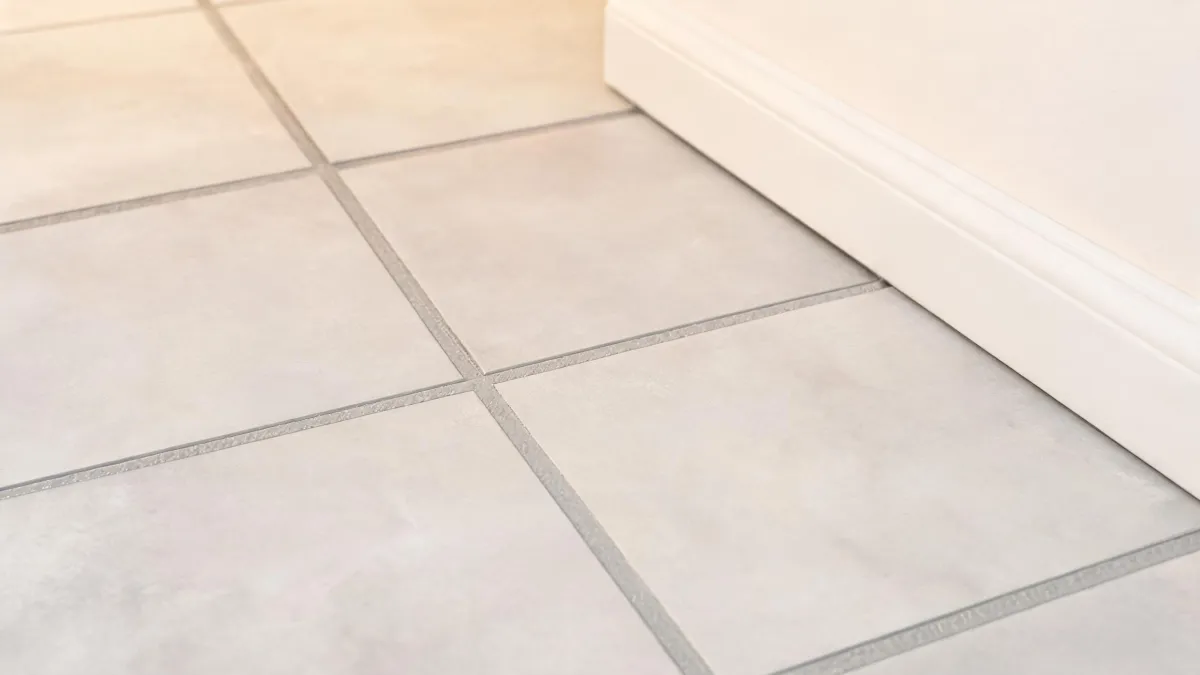
I still remember the email. Our VP of Operations forwarded a quote from a competitor, asking why our last tile order through Daltile was "noticeably higher" than what this other vendor was offering. The difference was about $0.40 per square foot. On a 2,000-square-foot project, that's $800. Not nothing. But not the whole story.
What I didn't have at that moment was a clean way to explain what that $800 bought us. It was basically a gut feeling—the kind you get after three years of managing maintenance tickets and hearing the same complaints over and over.
If you've ever managed facilities for a mid-size office, you know exactly what I mean. The budget spreadsheet says one thing. The maintenance log tells a completely different story. And the gap between those two narratives is where the real spending happens.
Here's what I actually manage: three office locations, roughly 150 employees total, and pretty much any physical thing that breaks, runs out, or looks terrible when clients visit. That includes flooring, wall finishes, restroom upkeep, garage surfaces, and—for some reason nobody explained to me during onboarding—the baseboard heater covers that seem to fail every single winter.
I'm not a facilities engineer. I'm not a procurement specialist. I'm the person who fields the ticket, finds the vendor, gets approval, and then lives with the result for the next five to seven years. That's the timescale nobody talks about when you're comparing unit prices.
The first time it hit me was two winters ago. We had specified Daltile bright white subway tile for a restroom renovation. Classic look, hard to screw up, or so I thought. The installer did a fine job. Six months later, the grout started looking gray. Not dirty—gray. Turns out the cleaning crew was using a general-purpose degreaser on it because that's what was in the supply closet. The tile itself was fine, but the grout was getting eaten alive by a $4 bottle of chemicals.
I didn't have hard data on how many other offices make this exact mistake, but based on conversations with a few other admins in our building, my sense is that it's basically universal. Nobody runs a cleaning product compatibility test when they're managing 40 other line items that day.
Let me walk you through what that $800 "savings" on a cheaper tile would have actually cost us. Because this is where the math gets interesting.
When I compared the quote from our regular Daltile stone center against the cheaper alternative side by side, the unit pricing looked straightforward. But the spec sheets told a different story. The less expensive tile had a higher water absorption rate—not by a lot, but enough that in a restroom environment, it meant more frequent sealing. That's an extra maintenance contract line item. Nobody puts that in the renovation budget because it happens after the project closes.
And then there was the cove base tile. This is the piece that finishes the bottom of the wall where it meets the floor. It's ugly in function and thankless in design, but if it's not installed correctly—or if the tile itself isn't cut true—you get gaps. Gaps where water sits. Water that sits becomes water that penetrates. And a $3 linear foot savings on cove base ends up costing $2,800 in flooring repair eighteen months later.
I wish I had tracked every maintenance hour associated with these decisions more carefully. What I can say anecdotally is that the restroom with the "cheap" materials generated three times as many work orders in one year as the restroom with the Daltile specification. Same traffic. Same cleaning schedule. Same building.
"The bottom line is that the quoted price is basically just the entry fee. It's the maintenance, repair, and replacement that runs the tab."
Earlier this year, I had to explain to our finance director why the garage-level storage room was getting a second floor coating in less than two years. The first epoxy job had been done by a low-bid contractor using product that didn't meet the manufacturer's application specs for our climate. It started peeling along the door threshold where moisture collected.
I'm the one who stood in that room with the finance director while she asked, "Didn't we just pay for this?" And I'm the one who had to say yes. That's the moment when you realize the procurement process and the maintenance process aren't two different jobs—they're the same job, and you're the only one connecting the dots.
That same month, our janitorial lead flagged that the baseboard heaters were emitting a faint burning smell. I had to figure out how to clean baseboard heaters before winter without breaking anything. The unit covers had accumulated six years of dust, lint, and whatever else floats around a mixed-use building. The manufacturer's instructions basically said "vacuum and wipe with a damp cloth," which sounds helpful until you're the one holding the vacuum hose upside down while trying to avoid bending the fins.
The solution was neither glamorous nor expensive. But it required knowing that the covers needed to be removed first, that the fins should be brushed rather than compressed, and that the whole operation should happen before the thermostat gets turned on for the season. That's institutional knowledge. It doesn't live on a spec sheet. It lives with the person who's had to do it wrong once.
The upside of standardizing on Daltile wasn't just the products themselves—it was the fact that our stone center rep actually answered the phone when I called with questions. The risk was that we were locking into one supply chain. I kept asking myself in the early months: is the reduced hassle worth the potential exposure if something goes wrong with this vendor?
Calculated the worst case: we'd have to scramble for an alternative mid-project. Best case: the consistency made our maintenance predictable. The expected value said go for it, but the downside felt real, because I'm the one who gets blamed when a project goes sideways, not the guy who signed off on the pricing sheet.
Even after choosing the Daltile specification for the restroom project, I kept second-guessing. What if their batch-to-batch color variation wasn't as tight as the samples suggested? The two weeks between order and delivery were stressful. I didn't relax until I saw the tile laid out on-site and compared the boxes side by side.
My experience is based on about 20 renovation and maintenance projects over three years, all within a mid-size commercial setting. If you're working with a much larger facility or a different climate, your mileage may vary significantly.
Here's what changed our approach:
None of this is groundbreaking. That's kind of the point. The solutions aren't complicated—they're just not obvious when you're staring at a pricing spreadsheet and trying to get a project approved.
If I had to reduce everything I learned into one sentence, it would be this: the cheapest line item on the purchase order is not the cheapest line item in the building's operating history.
When I compared our first year of maintenance data with the cheap materials against our second year after switching to the Daltile specification, the difference was clear. Not because the tile itself was dramatically better—it was good quality, but so was the alternative. The difference was that we stopped buying everything twice.
The materials arrived correctly specified. The cleaning crew knew what to use. The maintenance schedule reflected reality rather than wishful thinking. And I stopped having the same conversation with finance every six months.
Prices for tile and stone vary by region and specification (based on our 2024-2025 vendor quotes; verify current rates). But the principle doesn't: if you're managing facilities for real people in a real building, the cheapest decision upfront is rarely the cheapest decision overall.
Disclosure: This article reflects personal experience managing facility purchasing decisions. Product availability and pricing vary by location and time. Daltile was one of multiple suppliers evaluated during the period described.

Stefan Petrescu is a building climate-systems analyst specializing in air-conditioning equipment, heat pumps, ventilation units, ductwork, controls, boilers, fireplaces, stoves, and flue components. He uses ANSI/ASHRAE Standard 62.1-2025 ventilation criteria while comparing outdoor-air rate, airflow, static pressure, heating and cooling capacity, part-load efficiency, sound level, filtration, condensate control, combustion-air provision, and clearances. His application guides help mechanical engineers, installers, and owners size systems, verify interfaces, and balance comfort, indoor air quality, energy use, and serviceability.