Why the Best KONE Elevator Repair Is the One You Never Need
After handling 400+ KONE emergency service calls, I've learned the hard way that most emergencies are preventable. Here's what the data—and a 12-point checklist—actually change.

The lowest unit price is almost never the lowest landed cost. If you're choosing concrete blocks for wholesale or building a tile package around a porcelain tile catalog, score five things before you sign: spec compliance, breakage and returns, freight and MOQ, lead-time reliability, and supplier responsiveness. For Marazzi tile—especially Marazzi Moroccan Concrete 12x24—the catalog is your spec baseline, not your price list. For concrete blocks, a quote without ASTM C90 test reports is just a number.
I'm a procurement manager at a 45-person building materials distributor. I've managed our masonry and finish materials budget—about $1.9M annually—for six years. I've negotiated with 70+ vendors and tracked every order in our cost system. My initial approach was wrong. When I first started buying block and tile, I assumed the lowest quote would protect our margin. Two overruns later, I realized freight, breakage, and spec mismatch were doing the real damage.
It took me three years and roughly 240 purchase orders to understand that vendor fit matters more than vendor size. Our current scorecard has five lines. Not twenty. Five.
Unit price. Freight and pallet terms. Breakage and return rate. Lead-time variance. Admin load. In that order—but weighted by project.
For how to choose concrete blocks for wholesale, start with ASTM C90 and ASTM C140. ASTM C90 covers loadbearing concrete masonry units. C140 covers sampling and testing. Ask for current compressive strength reports, dimensional tolerance, moisture content, absorption, and finish. If a supplier can't send those in 24 hours, that's your answer.
Per ASTM C90, loadbearing concrete masonry units must meet specified compressive strength and dimensional tolerances. Verify current reports from the producer.
Here's the counterintuitive part: a block that's $0.12 cheaper per unit can cost more. If it's out of tolerance, your mason may need extra mortar, more labor, or worse—rework. In Q3 2024, we tested two block suppliers. Supplier A was 4% higher on unit price. Supplier B was cheaper, but breakage hit 6.8% on one truck. A's breakage was 1.9%. Landed, A won by about 5%. That's the kind of math a quote hides.
I also learned never to assume same specifications mean identical results. We approved a block submittal based on a one-page data sheet. The first truck had different corners and a rougher face. Not technically wrong. Just different enough to change mortar coverage. Now we require a physical sample and a current test report before the PO.
Concrete blocks are heavy. Freight isn't a rounding error. For wholesale, ask:
I said standard delivery to one vendor. They heard curbside, no liftgate, no appointment. Result: a $600 unloading problem and a crew standing around. We were using the same words but meaning different things. Now our PO template spells out liftgate, appointment window, and site contact. Simple.
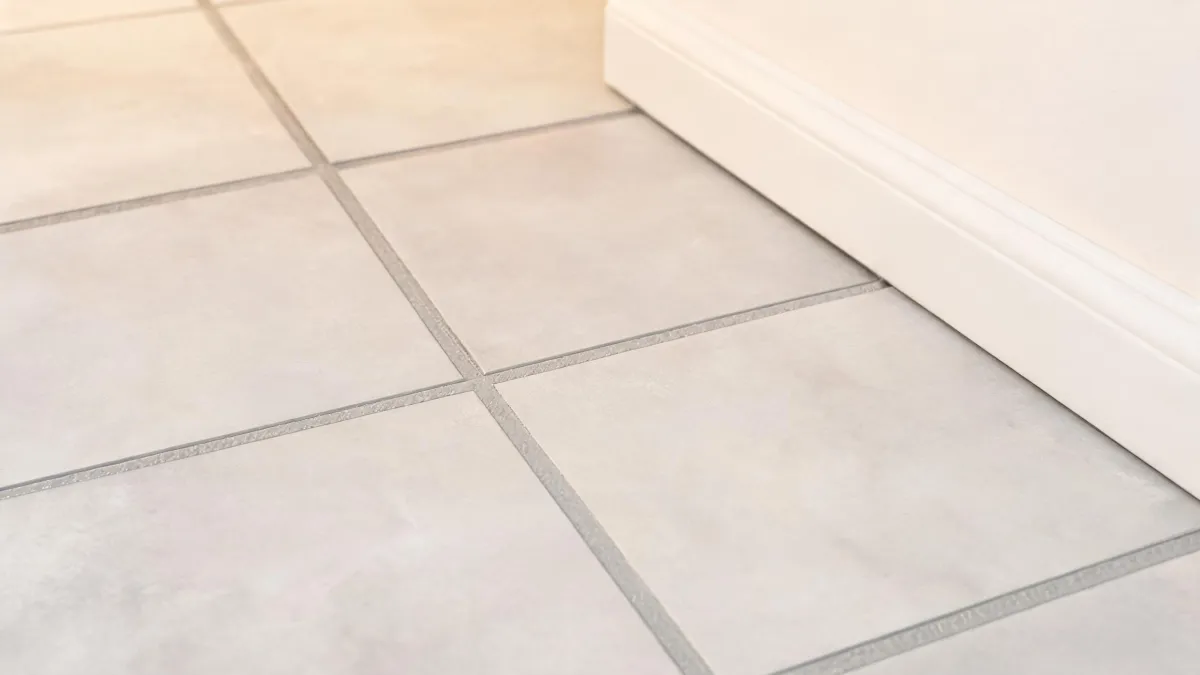
Marazzi tile usually enters our bids as the design-led option. Marazzi Moroccan Concrete 12x24 is a good example: it gives customers a concrete look with porcelain performance, but it still has to pass the same TCO test. The porcelain tile catalog tells you what's available. It doesn't tell you what's in stock, what's discontinued, or what the dye-lot variation will do to a 20,000 sq ft order.
For any Marazzi porcelain tile catalog item, ask for:
The catalog image is not the spec. I learned that after approving a Moroccan Concrete 12x24 sample that looked warm and even. The production lot was more varied. Not defective—just real porcelain. We should've ordered 12% overage instead of 8%. That 4% gap cost us a change order.
Another budget trap: the porcelain tile catalog may show a 12x24 size as a standard item. Your project may need rectified edges, a specific DCOF, or a matching bullnose. Those details change price and lead time. Get them into the bid before you compare numbers.
Precast concrete is often quoted separately from tile. That's fine until substrates meet. If precast panels are out of flatness, tile setting gets expensive fast. Put flatness tolerance, curing time, and moisture limits in the same bid package. Otherwise you'll pay twice: once to the precast supplier, once to the tile installer.
For a wholesale program, I'd build one approval sheet: block spec, mortar spec, precast tolerance, tile spec, adhesive spec, grout spec. One page. Every vendor signs the same page. That's it.
After tracking 240+ orders over six years, I found that 61% of our budget overruns came from three causes: freight surprises, breakage, and spec substitutions. We implemented a three-quote minimum and a one-page TCO sheet. Overruns dropped by 11% in the next four quarters.
Our scorecard:
Weights change by project. For a fast-track hotel lobby, lead-time reliability goes to 30%. For a warehouse, landed cost may go to 35%. No universal answer.
My experience is based on about 240 mid-market commercial and light industrial orders in North America. If you're sourcing container-direct overseas, luxury stone, or custom precast for infrastructure, your risk profile is different. I can't speak to how these weights apply to every market.
Also: this isn't a guarantee. Block performance depends on engineering, installation, and site conditions. Tile performance depends on substrate, adhesive, grout, and maintenance. Marazzi tile won't fix a bad substrate. A cheap block won't fix a bad design. The right answer is a supplier who gives you test reports, honest lead times, and a clear return policy—then a buyer who checks the fine print.
If you're choosing concrete blocks for wholesale, start with ASTM C90 reports and a TCO sheet. If you're building a tile package, use the Marazzi porcelain tile catalog as a starting spec, then verify Marazzi Moroccan Concrete 12x24 against your real project conditions. The lowest number on the page is rarely the final number. That's the whole lesson.

Akiko Fujimori is a structural building-materials analyst covering sawn timber, structural composite lumber, plywood, OSB, masonry units, concrete products, reinforcing components, and metal building systems. She references ASTM D5456 and ASTM C90 within their material scopes while comparing bending strength, modulus of elasticity, compressive strength, density, moisture content, dimensional tolerance, connector capacity, and corrosion protection. Her evaluations help structural designers, fabricators, and procurement teams align declared properties, connection details, exposure conditions, and inspection evidence with project loads.