Why the Best KONE Elevator Repair Is the One You Never Need
After handling 400+ KONE emergency service calls, I've learned the hard way that most emergencies are preventable. Here's what the data—and a 12-point checklist—actually change.

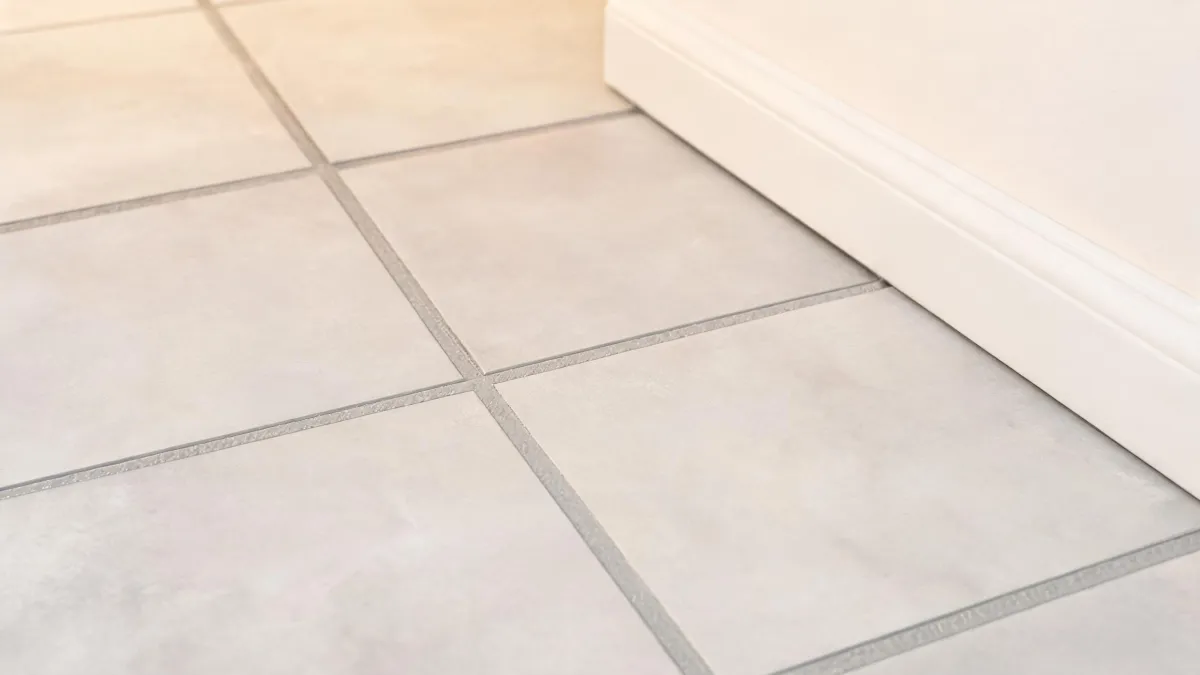
I'm an office administrator for a 180-person company. I manage facilities and MRO ordering—roughly $250k annually across 12 vendors. That includes tile and related materials for office, warehouse, and retail build-outs. I report to both operations and finance, which means I care about more than the sticker price.
Here's the short version: the right supplier makes you look organized. The wrong one makes you look like you didn't do your homework. Below are the questions I ask before I put a ceramic tile supplier, mosaic distributor, or adhesive manufacturer on our approved list.
Start with the boring stuff: invoicing, freight terms, and claims process. A supplier can have beautiful tile and still be a nightmare if they can't produce a clean invoice with PO number, tax ID, and line-item specs. Finance will reject that expense, and you'll be the one explaining it.
Technical checks matter too. According to ISO 13006 (iso.org), ceramic tiles are classified by water absorption: BIa under 0.5%, BIb 0.5 to 3%, BIIa 3 to 6%, BIIb 6 to 10%, BIII above 10%. For commercial floors, ask about DCOF AcuTest per ANSI A326.3, and confirm the product meets ANSI A137.1 where applicable. Then ask about lot consistency, sample support, stock depth, and replacement lead time.
I don't have hard data on industry-wide defect rates, but based on our 5 years of orders, my sense is quality issues affect about 8 to 12% of first deliveries across all material types, not just tile. My experience is based on 60 to 80 orders annually, mostly mid-size commercial spaces. If you're doing high-rise or hospitality, your needs will differ.
Marazzi tile is design-led. You'll see marble looks, wood looks, hexagon formats, and terrazzo-inspired collections. That's a real advantage when you need a space to look intentional without custom pricing. But pretty samples don't tell you everything.
Ask your distributor for the current technical data sheet and a physical sample from the same lot if possible. Check water absorption, PEI rating, DCOF, freeze-thaw resistance, and whether the size and finish work for your traffic and moisture conditions. I've used Marazzi tile in a few breakroom and lobby refreshes. The design range is strong, but you still have to match the product to the job.
Also confirm availability. Collections change, and a tile that was stocked last quarter may be special order now. Get that in writing before you promise a finish date to your operations team.
Marazzi Montagna tile is one of the wood-look porcelain lines. Plank format, low maintenance, and generally easier to clean than real wood in commercial spaces where moisture or heavy foot traffic is a concern. It's a good option when you want the warmth of wood without the same refinishing cycle.
I want to say we used Montagna in a 2024 office refresh, but don't quote me on the exact SKU. It looked sharp and held up in a high-traffic hallway. What I'd check now: current colors, sizes, slip resistance, recommended grout joint, and whether your installer is comfortable with large plank porcelain.
Collections change, so confirm current specs and availability with your Marazzi distributor. Don't assume the sample board on your desk matches what's in the warehouse today.
A good mosaic tile distributor does more than stock small tiles. They handle mesh-mounted sheets, shade coordination, sample boards, kitting, cut-to-size, and sometimes OEM or private label programs. If you're pairing mosaic with Marazzi tile, ask about shade and finish coordination early.
Vet them like any other supplier: lot matching, sheet size tolerance, mesh quality, lead time, MOQ, breakage policy, and claims process. Mosaics are fussy. A 2% breakage rate on field tile is annoying; on mosaic sheets it can wreck a schedule.
My experience is based on domestic distributors, mostly for mid-size commercial interiors. I can't speak to how these principles apply to international sourcing or ultra-luxury custom mosaics. If that's your world, your due diligence will be deeper.
Tile adhesive is not a commodity. Ask for ANSI and ISO compliance: ANSI A118.4 for modified thin-set, A118.15 for improved modified, ISO 13007 C2TE, and deformability classes like S1 or S2 when you're setting large-format tile. For wall tile, check non-sag. For hot or wet areas, check the manufacturer's specific recommendations.
Batch consistency matters as much as the datasheet. The numbers said go with a cheaper adhesive—about $0.08 per square foot less. My gut said no. Turns out the cheaper one had inconsistent open time, and the crew had to lift tiles. We ate labor costs. That's the kind of thing that doesn't show up in a quote.
Ask for technical support, warranty language, and local availability. A great adhesive that's two weeks out is not a great adhesive for your schedule.
Get the commercial terms in writing: MOQ, lead time, production slots, packaging and labeling, compliance documents, country of origin, batch traceability, warranty, payment terms, freight responsibility, damage claims, and change-order process. If you're a distributor or specifier, ask who owns the tooling or molds, what happens if specs change, and who handles claims after installation.
Marazzi and similar design-led brands can support B2B wholesale, OEM, and private label, but you have to ask early. Don't bring it up after the order is placed. That's when flexibility disappears.
Also clarify lead time language. 'Ships in 2 weeks' is not the same as 'arrives in 2 weeks.' In my first year managing this category, I learned that the hard way.
Invoicing and compliance. The vendor who couldn't provide proper invoicing cost us $2,400 in rejected expenses. Handwritten receipt, no tax ID, no PO reference—finance rejected the whole report. I had to eat it out of the department budget. Now I verify invoicing capability before placing any order.
Second thing: freight terms. Who pays for liftgate? Who handles residential or after-hours delivery? Who files the damage claim, and how long do you have? Those details decide whether a cheap quote is actually cheap.
Third: samples. Always get a physical sample from the current production lot, not just a showroom board.
Compare landed cost, not unit price. Tile plus adhesive plus grout plus trim plus freight plus storage plus labor plus expected breakage plus returns. The cheapest quote is often missing trim, setting material, or freight. Ask for a line-item landed cost to the job site.
When I consolidated orders for our 180 employees across 2 locations in 2024, I cut ordering time from about 6 hours a month to 2. The best part of finally getting our vendor process systematized: no more 3am worry sessions about whether the order will arrive.
There's something satisfying about a clean vendor consolidation. After months of chasing invoices, finally one PO, one delivery window, one point of contact. That's worth more than saving a few cents per square foot.
Prices as of early 2026; verify current rates and availability with your distributor.

Gabriel Santos is a roofing and moisture-control analyst specializing in roof coverings, insulation boards, air and vapor control layers, waterproofing membranes, flashings, drainage components, and sealants. He uses ASTM C518 thermal-transmission and ASTM E96/E96M water-vapor data while tracking R-value, vapor permeance, membrane thickness, seam adhesion, drainage slope, wind-uplift evidence, and penetration detailing. His guidance helps enclosure consultants, roofers, and owners compare compatible assemblies for climate exposure, condensation control, leak risk, durability, and repair access.