Why the Best KONE Elevator Repair Is the One You Never Need
After handling 400+ KONE emergency service calls, I've learned the hard way that most emergencies are preventable. Here's what the data—and a 12-point checklist—actually change.

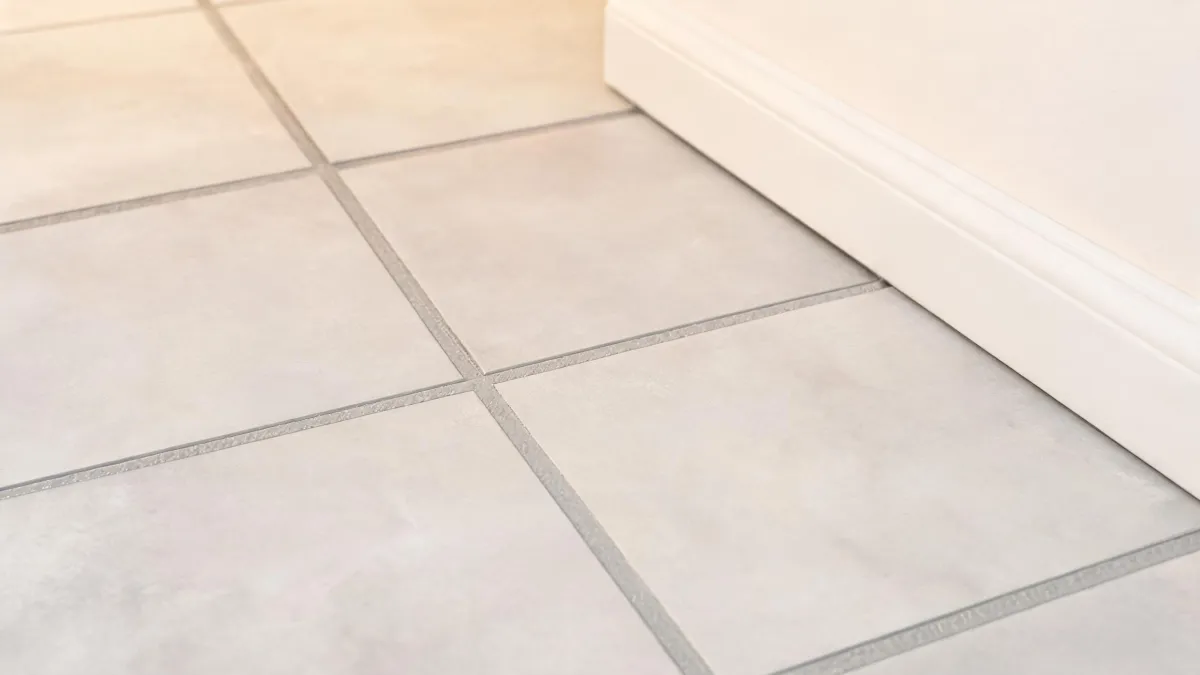
In my role coordinating emergency material supply for B2B construction and renovation projects, I've handled about 200 rush orders over the past several years. Most of them involving tiles, brick veneer, concrete blocks, or tile adhesive that a contractor needed in 48 to 72 hours — not two weeks.
When the deadline is tight, there are really only two paths: go wholesale direct (manufacturer or large distributor) or go local dealer. From the outside, it looks like the local dealer should always win on speed. The reality is more nuanced — and I've seen both paths fail spectacularly.
Here's the catch: I'm comparing these two options across five dimensions that actually matter when you're under pressure. Cost. Lead time. Quality consistency. Customization. Risk. Each dimension gets its own direct comparison, and I'll tell you which one wins — for that specific dimension.
"Speed, quality, price. Pick two." That's the old saying. But when you're ordering 2,000 square feet of tile adhesive wholesale with a 36-hour window, you need all three. Which means you need to know which option sacrifices what.
This is where the comparison gets counterintuitive.
Wholesale direct: Unit pricing is lower — typically 20–40% below local dealer rates for bulk orders. A pallet of tile adhesive that runs $18–22 per bag through a distributor might be $12–15 per bag wholesale. But rush orders trigger expedited production or air freight. When we placed a rush order for 3,600 square feet of Marazzi tile in March 2024, the base cost was $9,400. The expedited freight added $1,800. Still cheaper than local — but not by as much as the price sheet suggests.
Local dealer: No rush production premium (they're pulling from existing stock). But their unit price is already marked up. And if they don't have enough quantity, they order from the same wholesaler you could have called directly — adding a day and a margin.
Verdict: For orders under $5,000, local dealer is often cheaper once you factor in freight and minimum order quantities. Above $5,000, wholesale direct wins — even with rush fees. The breakeven sits around the $4,000–6,000 range depending on material weight and distance.
I assumed "same specifications" meant identical results across vendors. Didn't verify. Turned out each had slightly different interpretations of "standard" tile thickness — one quoted 9mm, another shipped 8.5mm. For wall tile, irrelevant. For floor tile on a commercial job, that variance affected the adhesive coverage rate we'd calculated. We had to reorder adhesive.
This is where I've learned to be skeptical of both sides.
Wholesale direct: Standard lead time for tiles and masonry is 2–4 weeks. Rush production can compress that to 5–7 business days for domestic manufacturers. For imported materials (Marazzi marble, for instance, depending on the collection), you're looking at air freight on top of production time. My fastest genuine wholesale rush was 72 hours for concrete blocks from a regional manufacturer — but that required a dedicated production run and a $2,200 surcharge on a $7,800 order.
Local dealer: If it's on the floor or in the warehouse, you can have it same-day. If it's not, their "next-day" is really 2–3 days because they're placing the same wholesale order you could have placed yourself. And here's the part nobody tells you: local dealers prioritize their regular contractors. If you're a one-time buyer needing 400 brick veneer units in 48 hours, you're at the back of the queue.
Verdict: Local wins for immediate availability of in-stock items. Wholesale wins for anything requiring a specific SKU, color lot, or quantity beyond what a dealer stocks. I've never seen a local dealer beat a wholesale manufacturer on a 5-day window for a non-stock item.
The "local is always faster" thinking comes from an era before real-time inventory systems. Today, a well-organized wholesale partner with a digital catalog (most Marazzi distributors have one) can confirm stock and ship faster than a local dealer who has to "check with the warehouse" — a phrase that has cost me at least two deadlines.
This is the dimension most buyers ignore until it's too late.
Wholesale direct: You're getting material from a single production run, usually. That means consistent dye lots (critical for tile and brick veneer), consistent cure times (for concrete blocks), and traceable batch numbers. When something goes wrong, you can trace it back. According to ANSI A137.1 standards for ceramic tile, dimensional tolerance is defined within a single production lot — cross-lot variance is permitted. Ordering wholesale ensures a single lot.
Local dealer: They may pull from multiple lots if their inventory is low. I've seen this with brick veneer — two pallets from different runs installed side by side, and the color shift was visible to the client. Not a defect per the manufacturer. But a problem for the project. Good luck arguing that with a dealer who's already moved on to their next order.
Verdict: Wholesale wins, no contest — if you specify lot matching and confirm batch numbers before shipping. If you don't ask, you're rolling the dice either way.
Neither option is great for rush customization. But that's exactly why you need to know the limits.
Wholesale direct: Most manufacturers offer OEM and private label for tiles and masonry — custom packaging, branded labels, specific pallet configurations. But this adds 1–2 weeks minimum. For rush orders, you're limited to standard SKUs. However, some wholesalers will do cut-to-size or special packaging on an expedited basis if you ask — and pay. I've seen a 48-hour turnaround on custom-packaged tile adhesive with a $4,500 minimum order and a 15% rush premium.
Local dealer: No OEM capability. No private label. No custom anything. They sell what's on the shelf. For emergency fill-in orders, that's fine. For branded project materials, it's a dead end.
Verdict: If you need OEM or private label within a deadline, wholesale direct is the only viable path — and you'll pay for it. If you just need generic materials fast, local dealer is fine.
I lost a $12,000 project in 2023 because we tried to save $900 by going local instead of wholesale for a rush brick veneer order. The local dealer promised 48-hour delivery. It arrived in 96 hours. The delay pushed our installation window past the client's inspection deadline. They walked. We ate the penalty clause.
Wholesale direct: Higher upfront commitment (deposits, minimum orders), but clearer accountability. If they miss the rush window, you have a paper trail — purchase order, confirmed ship date, tracking. More leverage to negotiate remedies.
Local dealer: Lower commitment, easier to walk away. But when they miss — and they will — your recourse is limited. "We did our best" is not a remedy.
Verdict: Wholesale is higher-risk on paper but lower-risk in practice for anything deadline-critical. Local is lower-risk for small, non-critical fill-in orders.
The answer depends on four factors: order size, deadline tightness, specification requirement, and whether you need customization.
Choose wholesale direct when:
Choose local dealer when:
Best practice for rush orders: Call wholesale first. Get a real quote with rush pricing. Then call local. Compare total landed cost and confirmed delivery window. Book the one that actually commits. Verify the order twice before it ships — once by email, once by phone. The 5 minutes you spend confirming could save you 5 days of rework.
My experience is based on about 200 mid-range commercial and residential orders. If you're working with luxury custom projects or ultra-budget volume builds, your experience might differ. But the fundamentals — cost, time, quality, customization, risk — hold across segments.
The rush order you prepare for is always cheaper than the one you scramble for.

Celeste Fournier is an interior building-products analyst covering wall panels, gypsum board, acoustic ceilings, decorative moulding, wallpaper systems, architectural coatings, sealants, and finishing accessories. She applies ASTM C423 sound-absorption results and ASTM E84 surface-burning data while assessing NRC, flame-spread index, smoke-developed index, dry-film thickness, adhesion, joint movement, cleanability, and finish consistency. Her technical articles help designers, contractors, and facility teams coordinate appearance, acoustics, fire-performance documentation, application conditions, and long-term maintenance.