Why the Best KONE Elevator Repair Is the One You Never Need
After handling 400+ KONE emergency service calls, I've learned the hard way that most emergencies are preventable. Here's what the data—and a 12-point checklist—actually change.

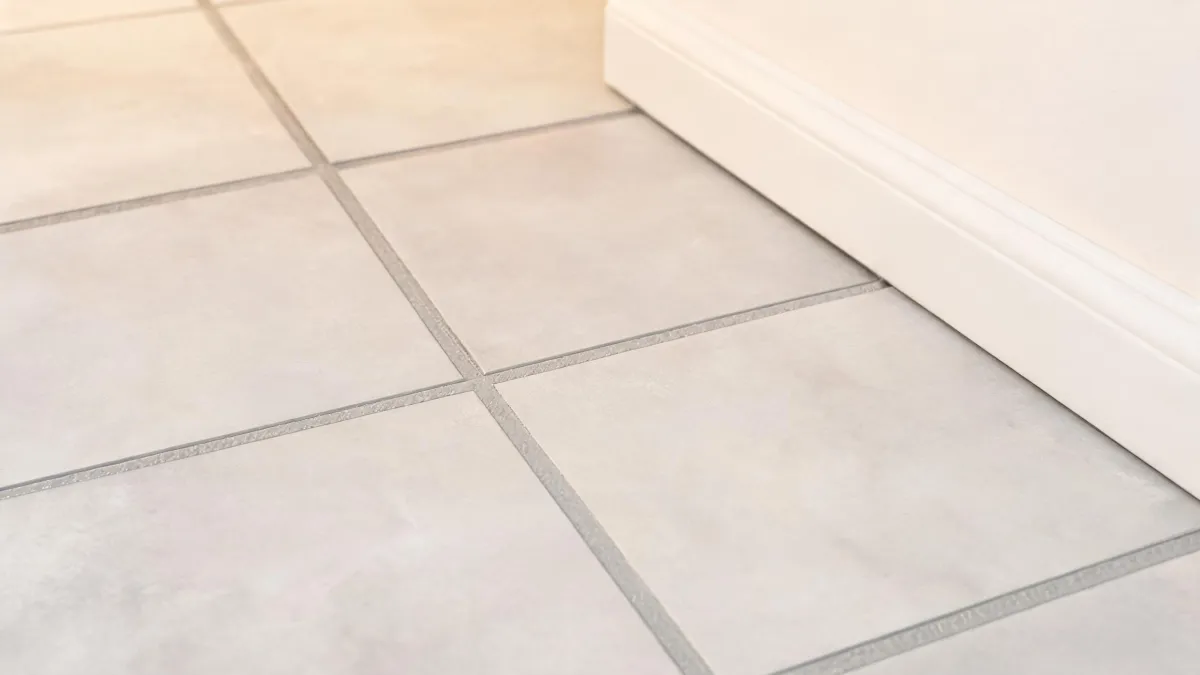
I buy building materials for a living — tile, brick, block, mortar — so the questions I get aren't usually "which brand is best." They're "why did the quote change," "why didn't the lot match," and "which one is cheaper once everything is counted."
These are the seven questions I get most often from other buyers, distributors, and specifiers. Where I'm citing a standard, I name it. Where I'm citing a number, I tell you it came out of our own purchasing records — your mileage will vary by region and volume.
Quick context on who's answering: I'm the procurement manager at a 220-person contracting and supply business. I've managed our materials budget (roughly $2.6M annually) for seven years, negotiated with 40+ vendors, and logged every order in our cost tracking system. Most of my opinions come from invoices, not theory.
Because they're rarely quoting the same thing. One distributor quotes a stocking SKU off current inventory. Another quotes a special order at a different caliber, or a discontinued-but-available lot, or excludes freight. Different channels carry different stock — Marazzi is a Mohawk Industries brand with distribution through multiple channels, so availability shifts by region and by quarter.
So before you compare a single number, get these on paper for every quote: exact collection and SKU, nominal and actual size, caliber, shade/tone range, rectified vs. pressed edge, pieces per box, square feet per pallet, freight terms, liftgate or boom requirement, pallet exchange policy, and lead time in business days. Then normalize everything to delivered cost per installed square foot.
In Q3 2025 I ran the same 12,000 sq ft spec through four distributors. Unit price spread was 18%. After freight, pallet deposit, and one distributor's special-order surcharge, the spread collapsed to about 7% — and the lowest unit price wasn't the lowest landed cost. It came in third.
I can't quote Lume's current specs from memory — collections get reformatted, sizes get added and dropped, and technical data sheets get revised. What I can give you is the list I pull before any tile goes into a spec package:
That last one matters more than people think. In 2022 — or 2023, I'd have to check the PO — we installed about 4,000 sq ft of a marble-look porcelain in a common area, and nine months later the client wanted the adjacent corridor matched. Shade had drifted and the size had been phased out. We ate roughly $2,900 in replacement tile and re-install labor. Now I buy attic stock up front.
Breakage and scrap allowance (3–5% is a reasonable planning number, more if you're on rough terrain), color range and blending labor, pallet deposits, unloading equipment, site staging, and the cost of a return trip when the truck can't get to the pour. An FOB plant quote excludes most of that.
Weight and cube matter too. Brick is dense enough that truckloads often weigh out before they cube out, which means a "cheaper" quote more distant from the job can quietly lose on freight.
The vendor failure in March 2023 changed how I think about lead-time buffers. One missed truck — three days, not two; the driver got held at a weigh station — left six masons standing around for most of a day. Call it $3,400 in labor and equipment. That erased every penny we'd saved on that vendor's unit price for the entire project.
Compliance and configuration, mostly. Ask for the ASTM C90 compliance letter and a recent compressive strength report. That takes ten minutes and it has saved me twice — once on a load that wasn't what the submittal said it was.
Then compare like for like: normal-weight vs. lightweight units (lightweight aggregate runs more per block but masons lay more of them in a day, so the installed cost can flip), actual dimensions and percent solid, reinforcement and grout fill assumptions, and who's offloading. A standard cube is around 108 units at roughly 1.7 tons, so delivery access isn't a hypothetical.
And be blunt about non-spec or "shop" units. If a supplier is offering them, ask what they're out of spec on. Sometimes the answer is fine. Sometimes it isn't, and you find out after the wall is up.
Depends on volume, and the honest answer is that they're different products with different risk.
OEM means the plant produces to your formulation and spec. You own the recipe, you carry more of the testing and liability burden, and your minimum order quantities and artwork costs are higher.
Private label means their established formulation goes into a bag with your name on it. Lower MOQ, faster to launch, and batch consistency is their problem — but you don't own the formulation, and you can get surprised when their cement supplier changes.
In my experience, below roughly four to six truckloads a year, private label almost always wins, because you're not amortizing plate and testing costs. Above that, OEM can come in 5–12% cheaper per bag — but you inherit spec ownership. The OEM quote on our type S came in at $9.40 a bag. No — $9.10, I'm mixing it up with the type N.
Either way, ask for the same five things: an ASTM C270 compliance letter for the type you're specifying (M, S, N, O, or K), sand gradation and any admixtures, batch-to-batch consistency data, who owns the bag artwork and plates, and what notice you get if the formulation or source changes.
I have mixed feelings about consolidating to one plant and one formulation. On one hand, simplicity and better pricing. On the other, I remember 2021. We run one primary plant and one approved backup on the identical spec — and we pay a small premium for the redundancy.
Most of what goes wrong on a masonry or tile job was knowable before the first pallet landed. For mortar, specify the ASTM C270 type and then resist the urge to over-specify strength. Type M isn't automatically better — higher cement content means less workability and more shrinkage cracking, and for veneer, type N or S is frequently the right answer.
For tile, the ANSI A108 standards and the current TCNA Handbook are where the rework lives: substrate flatness tolerances (commonly 1/4 in. in 10 ft for smaller tile and tighter for large-format — confirm the current figures), deflection limits, mortar coverage (generally 80% in dry interior conditions and 95% in wet or exterior conditions), movement and expansion joints, waterproofing in wet areas, and cure time before grouting.
The 12-point pre-order check I built after our third avoidable mistake: current data sheet on file · shade and caliber confirmed against the sample · minimum grout joint width · adhesive class matches the tile · substrate flatness verified and documented · deflection calculated, not assumed · expansion joints laid out on the drawing · waterproofing inspected before tile · mock-up panel approved in writing · attic stock quantity agreed · delivery access and offloading confirmed · one named contact on both sides.
Five minutes of verification beats five days of correction. I've never once regretted running that list. I have regretted skipping it.
Reserve stock and verification labor. Not the glamorous answer, but it's the one that shows up in the numbers.
We tracked about 380 orders over four years in our procurement system, and most of our budget overruns didn't come from unit price at all. They came from rework, short-shipping, and replacement orders at retail pricing when nobody had reserve material. Our policy now is 2–5% overage on tile by area, plus a full extra pallet or cube of brick or block per building for future color matching — because color ranges drift and you cannot blend a new lot into a wall that's been up for a year.
Budget the checking, too. Someone has to pull the data sheets, confirm the shades, and walk the substrate. If that's two hours a week of a project manager's time, it's the cheapest line in the budget.
Pricing referenced here is from our own purchase records and ballpark market ranges as of Q1 2026. Verify current pricing, availability, and standards with your distributor and the applicable ASTM, ANSI, and TCNA references before specifying or ordering.

Tariq Mahmoud is a plumbing and fixture analyst specializing in water-supply pipe, drainage systems, valves, faucets, sinks, toilets, shower hardware, and kitchen and bathroom fittings. He distinguishes ASME A112.18.1/CSA B125.1 performance requirements from NSF/ANSI/CAN 61 health-effects criteria while checking pressure, flow rate, leakage, operating torque, temperature limits, connection dimensions, and potable-water contact. His selection guides help engineers and developers compare code relevance, material compatibility, maintenance access, and documented performance for each installation.