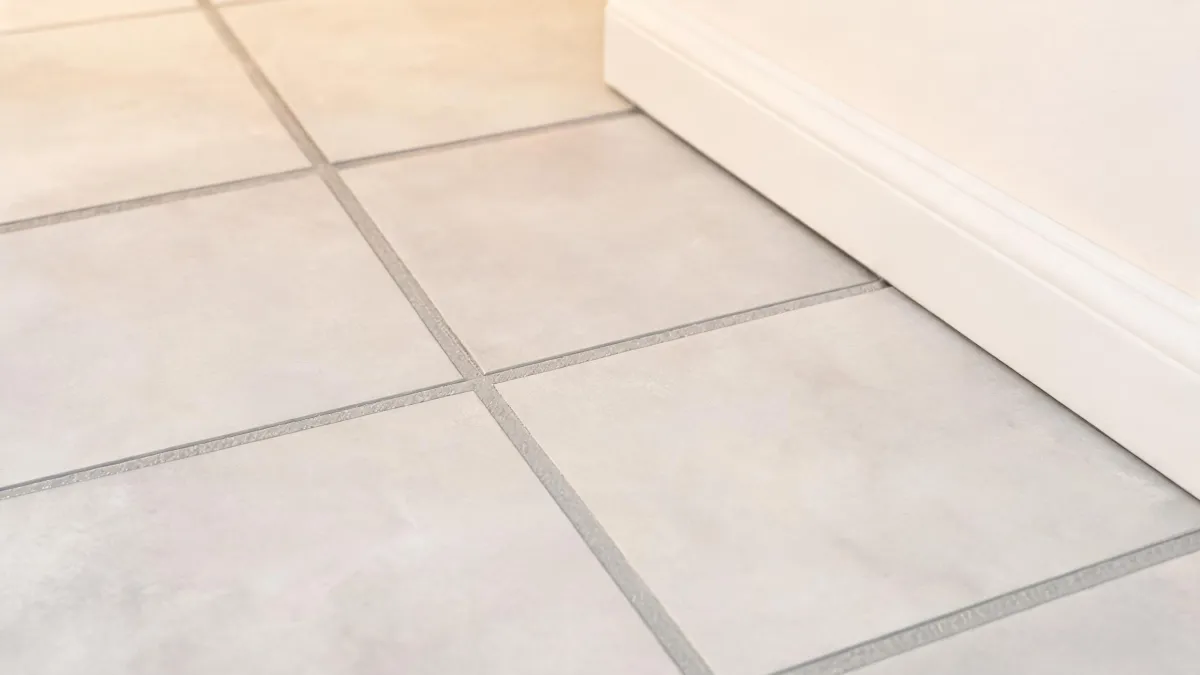
Every few months, someone asks me a version of the same question: how to choose masonry brick for wholesale. Usually, it's phrased as a price question. 'Who has the best block rate?' Or: 'Why is this Marazzi tile quote higher than the one from across town?'
I get it. Budgets are real. But after eight years of managing procurement for a mid-sized construction supply company (as of early 2026, at least), and after logging hundreds of material orders in a cost tracking sheet, I've stopped trusting the price on the quote. The price on the quote is the beginning of the conversation, not the end. The costs that arrive later are the ones that decide whether a project makes money.
The Question Everyone Asks First
When a wholesale buyer sends me a spec for Marazzi tile, the first reaction is about square-foot price. 'Why is this more than the plain grey porcelain from the other warehouse?' That's a fair question. The same thing happens with concrete blocks and masonry brick.
The surface problem is price. The deeper problem is that unit price only tells you what a product costs before it arrives at your yard. It doesn't tell you what it costs to handle, store, install, or replace. If you stop at the unit price, you're not comparing suppliers. You're comparing two versions of an incomplete number.
What's Really Going On: Three Cost Leaks
I've found three patterns in almost every over-budget material order I've reviewed. They're not exotic. They're just easy to ignore at the quote stage.
1. The quote is a promise, not a product
One order that sticks with me involved a block supplier. The base price was 9% below the next vendor. I almost signed. Then I added freight, fuel surcharge, a pallet deposit, and a split delivery fee. The 'savings' was gone.
Not a single fee was unusual. They just weren't in the first quote. In another case, a $1.12 brick became $1.48 delivered once the split delivery and tarps were added. That's a 32% difference hidden in line items. I'm not saying the supplier was trying to trick me. I'm saying the comparison was meaningless until I asked the right questions.
2. The spec is thinner than it looks
Marazzi tile is a good example. A collection like Marazzi Marble Obsession gets specified because the design sells itself and the format is consistent. But 'marazzi tile' on a purchase order can mean different finishes, different sizes, and different box quantities. The same thing happens with masonry brick. Two quotes for 'brick' can hide different compressive strengths, water absorption rates, and dimensional tolerances.
When a project calls for concrete blocks OEM, the spec needs to include unit weight, compressive strength, dimensions, and finish. If those aren't in writing, you're not comparing blocks. You're comparing stories.
3. Service speed is a line item
Here's the thing: a vendor who takes three days to answer a stock question will probably take three days to answer a damage claim. My spreadsheet told me to use the low-cost adhesive supplier. My gut said the slow response was a preview of slow delivery. I went with a compromise: a small test order.
The order arrived on time, and the adhesive was fine. But when I asked about a foam underlayment that wasn't in their catalog, the email took four days. For a busy site, four days is not annoying. It's a problem. Service speed is part of total cost of ownership (TCO), even though it doesn't show up on an invoice.
What That Costs You on an Actual Job
The most frustrating part of buying tile isn't the tile. It's the invoice that arrives with a line item you didn't expect. You'd think a quoted price means the price. It doesn't.
'What's not included?' is worth more than any discount I've ever negotiated.
I have mixed feelings about discount pricing. On one hand, a competitive bid shows a supplier wants the business. On the other, I can point to too many low quotes that ended with a transportation surcharge 'mentioned in the terms.' That's why I ask the not-included question before I ask the price.
Rework is the most expensive line item in construction because it doesn't show up in a material comparison. It shows up in payroll, in the schedule, in the finisher who has to fix a floor that shouldn't have been uneven in the first place. Three years ago, a crew installed a pallet of budget brick that saved us $850 on paper. The brick had a slightly wider tolerance than the spec. The masons had to adjust every course. The extra labor came to about $2,300. The 'savings' ended up costing us $1,450. Worse than expected.
There's also the inventory risk. With a design-led product like Marazzi Marble Obsession, a short order can mean waiting for the next production run. With commodity block, it can mean getting a pallet from a different plant and hoping the color matches. Either way, the delay lands on the person who signed the PO.
The Fix Is Boring. That's Why It Works.
This doesn't mean you should ignore price. It means you should change the comparison.
- Build a total landed cost sheet. Include quoted price, freight, fuel, pallet deposits, split delivery, packaging, minimum order impact, and payment terms. Keep it next to the invoice.
- Ask 'what's not included?' before you ask 'what's the price?' If a supplier hesitates, that's useful information.
- Compare specs, not marketing. For Marazzi tile, verify collection, finish, size, and whether the edges are rectified. For concrete blocks OEM, verify unit weight, compressive strength, and curing. For masonry brick, check water absorption and dimensional tolerance.
- Place a small test order. It's not about rejecting a supplier over one pallet. It's about seeing how quotes, delivery, and damage claims work under normal conditions.
That test order is the cheapest insurance you'll buy.
One more thing on marketing claims. Per FTC Green Guides (ftc.gov/green-guides), if a supplier calls a product 'eco-friendly' or 'low-carbon,' the claim has to be substantiated. I mention that because 'green' shows up in tile, block, and adhesive marketing more often than it shows up in data sheets. Ask for the data sheet.
Don't stop at the tile. The tile adhesive supplier is part of the same system. A cheap bag that isn't rated for the substrate can fail. A failed floor is not a $40 problem. It's demolition, replacement, and a damaged client relationship. I'd rather pay 10% more for a technical data sheet I can trust than 10% less for a bag that might work.
The Bottom Line
Here's how to choose masonry brick for wholesale, in one line: start with the spec, then the sample, then the total landed cost, then the relationship. That order has saved me more money than any negotiating tactic I know.
Look, I'm not saying every low quote is a trap. Some suppliers run lean and pass the savings on. But the supplier who puts the fees on the table first is easier to plan with. In my experience, the transparent quote usually costs less in the end. That's not a theory. It's the pattern I see in eight years of cost tracking.
Pick the supplier you can trust, not the number you want to see. Simple.