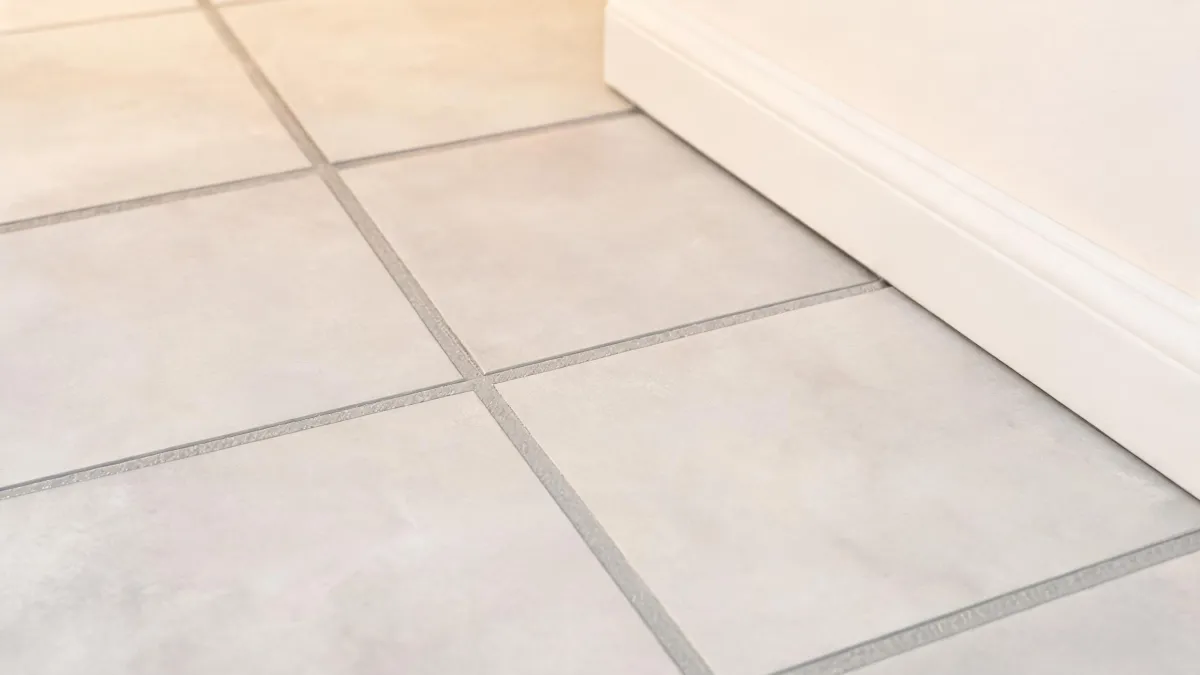
Short answer: Yes, Marazzi tile is good — but the tile isn't what kills your deadline
If you're asking "is Marazzi tile good," the honest answer is yes — specifically their marble-look, wood-look, and hexagon collections. I've spec'd them on hotel lobbies, multi-family entryways, and one 40,000 sq ft restaurant rollout. They hold up. The patterns don't repeat in obvious ways. Grout joints line up the way they should.
But here's the thing nobody asks me until it's too late: on the rush jobs I've coordinated — and that's over 200 of them since 2019 — the tile itself has never been the reason a project slipped. It's always the mortar mix compliance or the masonry brick sourcing underneath it.
Those two line items get maybe 10 minutes of attention during purchasing and 100% of the blame when things go wrong. If you're a distributor, contractor, or OEM buyer reading this to decide whether Marazzi is worth your shelf space, the tile question is the easy one. The masonry brick OEM and mortar spec question is the one that actually decides whether you make money on the job.
Why I'm the person writing this
I coordinate rush delivery for a building materials supplier — tiles, mortar, adhesives, brick, precast. My whole job is triage: a client calls, the deadline is 48 or 72 hours out, and I have to figure out what can actually ship, what needs substituting, and what compliance line we absolutely cannot cross.
In Q4 2025 alone, we processed 47 rush orders with a 94% on-time rate. The 3 that slipped both slipped for the same reason: a mortar compliance mismatch we didn't catch until pallets were already loaded.
I remember one specifically. In November 2024, a distribution client called at 9 pm on a Friday. They had a 62,000-unit masonry brick OEM order due Monday morning for a commercial retaining wall. Standard lead time on that spec is 14 days. Their previous vendor had confirmed the order and then gone silent for a week.
We found a partner mill that could run it. Paid $4,200 in rush premiums on top of a $38,000 base. Delivered Sunday at 6 am. The client's alternative was a $50,000 late-delivery penalty clause and losing the reorder for the whole development phase.
The part nobody remembers: the mortar. Because the OEM brick spec'd a Type S mortar under ASTM C270, and the client's field team had been told — incorrectly — that Type N was "close enough." We caught it in the paperwork at 11 pm. If we hadn't, the wall would have come down in inspection, and the $4,200 rush fee would have looked like the cheapest part of a very expensive quarter.
What actually matters when you're comparing tile and brick sources
I've come to believe, after about 6 years in this role, that buyers evaluate building materials in the wrong order. They look at the tile first — the aesthetics, the price per square foot, the Marazzi vs. Dal Tile comparison — and treat the mortar and masonry brick OEM sourcing as an afterthought.
Flip that. Here's the order that's held up across every project I've worked:
1. Mortar compliance is not negotiable
The relevant standards are unglamorous but specific:
ASTM C270 covers mortar for unit masonry — Type M, S, N, O, and K. The type isn't a preference; it's a function of the unit's compressive strength, the wall's exposure category, and the structural engineer's spec.
Type S hits 1,800 psi minimum. Type N is around 750 psi. That's not a small gap. Field crews under deadline pressure sometimes treat them as interchangeable. They aren't, and inspectors know it.
For tile installation, the reference stack is ANSI A118 and the TCNA Handbook. A118.4 covers modified dry-set mortars, A118.15 covers improved modified. The A118.15 designation matters most when you're going over a substrate with deflection — which is basically every commercial floor.
The reason I bring this up in an article about whether Marazzi tile is good is simple: Marazzi will perform exactly as designed if it's set with the correct mortar, and underperform in strange ways if it isn't. Cracks that look like tile defects are usually substrate or mortar problems. Buyers blame the tile because the tile is what they can see.
2. Masonry brick OEM is a relationship, not a transaction
When I compare our OEM partners side by side — same nominal brick size, same ASTM C216 spec, comparable pricing — the differences that show up in an emergency have nothing to do with the brick. They have to do with responsiveness. How fast the mill confirms a spec change. Whether they can hold a color run when the client's architect calls back with a Delta E concern. Whether someone picks up the phone after 6 pm.
That sounds soft until you're the person who has to explain to a distributution client why their 6-pallet emergency order can't ship because the OEM's color match operator is on vacation and there's no backup trained on the line.
Speaking of color: if you're running a masonry brick OEM run for a branded storefront or a spec'd facade, the tolerance that matters is Delta E < 2 for brand-critical colors. Delta E of 2–4 is noticeable to trained observers; above 4 is visible to most people. Reference: Pantone Color Matching System guidelines. Most OEM mills I've worked with will commit to that in writing. The ones that "can't make that promise" are telling you something.
3. The cheapest quote usually has the same tile and a thinner mortar spec
This is the pattern I keep seeing. Two quotes arrive, 18% apart on the tile line, 4% apart on the mortar line. Buyers pick the cheaper one. Six months later, the project's in arbitration because the thin-set didn't meet A118.4 on a wet-area substrate, and the re-grouting alone costs more than the original tile order.
That $200-per-pallet savings turned into a $9,400 remediation when a hotel in our region had to redo two full bathroom floors in 2025. The tile, incidentally, was fine. It was the mortar underneath that failed inspection.
Where this breaks down — and when to go a different direction
Not every project needs the compliance-first approach, and I don't want to pretend otherwise. A few honest boundaries:
- Residential interior work with stable substrates doesn't need the same mortar rigor as commercial wet areas. Type N is fine for a lot of above-grade veneer; the engineer's spec will say so.
- Marazzi isn't the only good option. For specific performance specs — extreme freeze-thaw exposure, high-traffic industrial floors, certain fire-rated assemblies — you may end up with a different manufacturer entirely. I've walked away from Marazzi-spec jobs where the exposure category ruled it out.
- OEM masonry brick capacity is regional. If your project is time-sensitive, the mill's distance from the site is a bigger variable than the mill's reputation. I've seen a well-run mill 400 miles away lose a job to a mediocre one 60 miles away, purely on transit risk.
- Mortar compliance requirements can be over-specified too. I've seen engineers call Type S when Type N would pass. That's a cost the buyer doesn't have to pay — but it requires a conversation, not a unilateral substitution.
The bottom line, and the thing I'd tell a distributor if they only had 30 seconds: yes, Marazzi tile is good. Yes, masonry brick OEM sourcing matters. But the number that decides whether your project succeeds is neither of those. It's whether the mortar under the tile and between the brick meets the code your inspector is going to read out loud.
Get that right, and the rest is logistics. Get it wrong, and no rush fee — no matter how fast — will save the job.