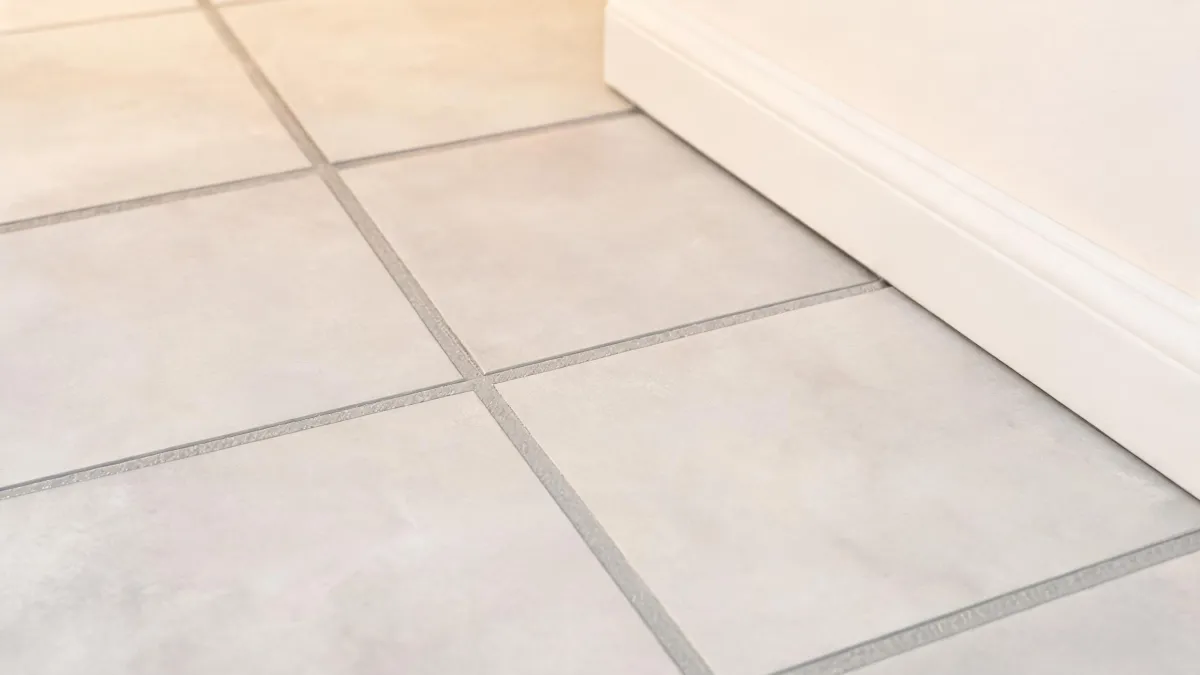
Before you place another wholesale tile order, read this. I've spent the last eight years coordinating rush orders and bulk material sourcing for contractors and distributors—everything from 48-hour tile turnarounds to adhesive OEM contracts that went sideways. These are the questions I actually get asked, plus a couple you should be asking.
What's the difference between Marazzi Moroccan Concrete and other concrete-look tiles?
Moroccan Concrete is Marazzi's take on the troweled-concrete aesthetic, and honestly, it's one of the reasons people search for "marazzi moroccan concrete" specifically. The key difference is the surface variation. Most concrete-look tiles try to replicate a smooth, uniform finish. Moroccan Concrete has more of a hand-troweled texture with subtle tonal shifts between batches (which is normal, by the way—that's part of the look).
From a specification standpoint, it's a full-body porcelain, so the color runs through the tile. That matters for commercial projects where you're cutting tile to size and don't want a white edge showing. If you're comparing it to cheaper imports, check the rectification. Marazzi tiles are rectified for consistent sizing, which means smaller grout lines and a cleaner install. I don't have hard data on industry-wide rectification standards, but based on the pallets we've received over the years, the consistency is noticeably better than budget brands.
Can I order Marazzi tile for a rush project? How does turnaround work?
Short answer: yes, but let's be realistic about what "rush" means. In my role coordinating tile orders for contractors, I've had clients call at 4 PM on a Tuesday needing tile for a Friday install. Normal turnaround for a standard Marazzi order is 3-5 business days depending on the collection and quantity. For a true rush, we're talking about expedited processing and freight, which adds cost—usually 20-35% on top of the base shipping.
Here's the thing most buyers miss: the lead time isn't the only variable. Stock availability is. A tile like Marazzi Moroccan Concrete in a popular size (like 12x24) is usually in stock at distribution centers. But if you need a specific lot number to match an existing install, that changes everything. Matching dye lots is a real issue with concrete-look tiles. I wish I had tracked how often lot mismatches caused problems—anecdotally, it's cost us rework twice in the last 18 months.
What should I look for in a tile adhesive OEM partner?
The "tile adhesive oem" search is interesting because there are two very different types of people searching it: contractors who want private-label thin-set, and distributors who want to develop their own brand. If you're in the second camp, the question isn't just "who makes good adhesive"—it's "who can deliver consistently at scale."
We evaluated adhesive OEM vendors for a private label program a few years back. The lowest quote was from a manufacturer who'd been in business for decades. But then we looked at packaging minimums, lead times, and customization costs (ugh, the setup fees). The low quote turned out to be 30% higher in total cost once we added MOQ penalties and shorter shelf-life requirements. My advice: ask for batch consistency data, not just a price sheet. A mortar that performs perfectly in their lab but varies by batch will kill your brand reputation.
How do I evaluate masonry brick wholesale suppliers without getting burned?
This is a big one. "Masonry brick wholesale" is a broad search, and you'll get everything from yard-based suppliers to importers. Here's what I've learned from coordinating emergency brick orders (yes, that happens): don't evaluate on price per brick alone. Evaluate on availability and consistency of color.
Brick is a natural product, so color varies between kiln runs. When clients need to match an existing building facade, that's where the emergency starts. We had a project in March 2024 where the original brick supplier couldn't match the color of brick they'd shipped six months earlier. Client had 50,000 bricks already laid and needed 12,000 more. The worst case was a full facade replacement—a six-figure disaster. We found a wholesale supplier who kept a sample archive of past runs and could match within a reasonable tolerance. That saved the project.
Brick veneer distributor buying guide: what specs actually matter?
Most buyers focus on the look of brick veneer—the color, the texture, the "old brick" vibe. And sure, aesthetics matter. But the question they should ask is about the physical specs that affect installation and durability.
Here are the specs I look at when sourcing brick veneer for distributors:
- Water absorption rate—lower is better for freeze-thaw climates. ASTM C216 requires a max of 17% for severe weather.
- Compressive strength—you want at least 3,000 psi for veneer applications.
- Dimensional tolerances—if you're matching to existing brick, you need consistent size, or your mason will hate you.
Also, think about the packaging. It sounds trivial, but inconsistent pallet counts or damaged packaging can throw off a whole job schedule. That was a $12,000 lesson for us: a pallet of brick arrived with crushed corners, and 200 units were unusable. The supplier's warranty didn't cover it because the freight company's inspection wasn't done properly. Always document damage at delivery, not later.
Is Marazzi tile worth the price compared to cheaper imports?
My answer is going to sound biased, so let me frame it with numbers. In my experience managing orders across multiple brands, the lowest quote has cost us more in about 60% of cases. That's not a precise statistic—I don't have perfect data on every project—but it's the pattern I've seen.
Why? What you save on the tile you spend on:
- Higher waste factor due to inconsistent sizing
- More time on installation (labor is the biggest line item)
- Potential warranty or liability issues
- Color variation that forces you to buy extra tile or redo a floor
Like, one project we saved $1,200 on a cheaper porcelain tile. Then the installer hit a 12% waste rate instead of the typical 5%, and the color variation between boxes was so bad he had to open every box and blend them across the floor. That ate the savings and then some. The TCO approach is the only honest way to compare. Marazzi isn't the cheapest, and I'm not going to claim it is. But for B2B buyers, long-term inventory consistency and fewer install problems usually outweigh the per-foot savings.
What's the biggest mistake buyers make with Marazzi tile orders?
The biggest mistake isn't picking the wrong tile. It's ordering without checking the inventory depth across the entire supply chain. I'm not just talking about what's in stock at the distributor. If you're a distributor, you should also be checking whether Marazzi can replenish quickly.
Here's an example: a distributor ordered 40 pallets of a popular collection for a big roll-out. They checked stock, everything was fine. But then three weeks later, they needed another 10 pallets. The collection had shifted into a production transition, and the next run wasn't scheduled for six weeks. That's when the client called me, in a panic. We managed to source from a different warehouse (thankfully, the distribution network had it), but it was close.
So, the practical advice: before you commit, ask for the inventory snapshot of the specific SKU and the production schedule for the next 60 days. The answer might save you from a very expensive lesson.