I work on the quality side at Marazzi. My job is to review the tile, mortar, concrete block, and brick veneer batches before they get a “ship” stamp—roughly 200 unique items a year. In our Q1 2025 quality audit, I rejected 11% of first deliveries, usually for shade drift or a dimension that walked outside tolerance.
This article is a comparison, not a recommendation to ignore brick. You’re probably weighing two material families: a design-led porcelain tile like Marazzi tile Rice Bianco, or a brick veneer product. I’ll compare them across five practical dimensions with a clear bottom line in each one. Then I’ll give you a checklist for how to evaluate brick veneer manufacturers if that’s the direction you take.
1. Visual Consistency: Predictable Tile vs. Characterful Brick
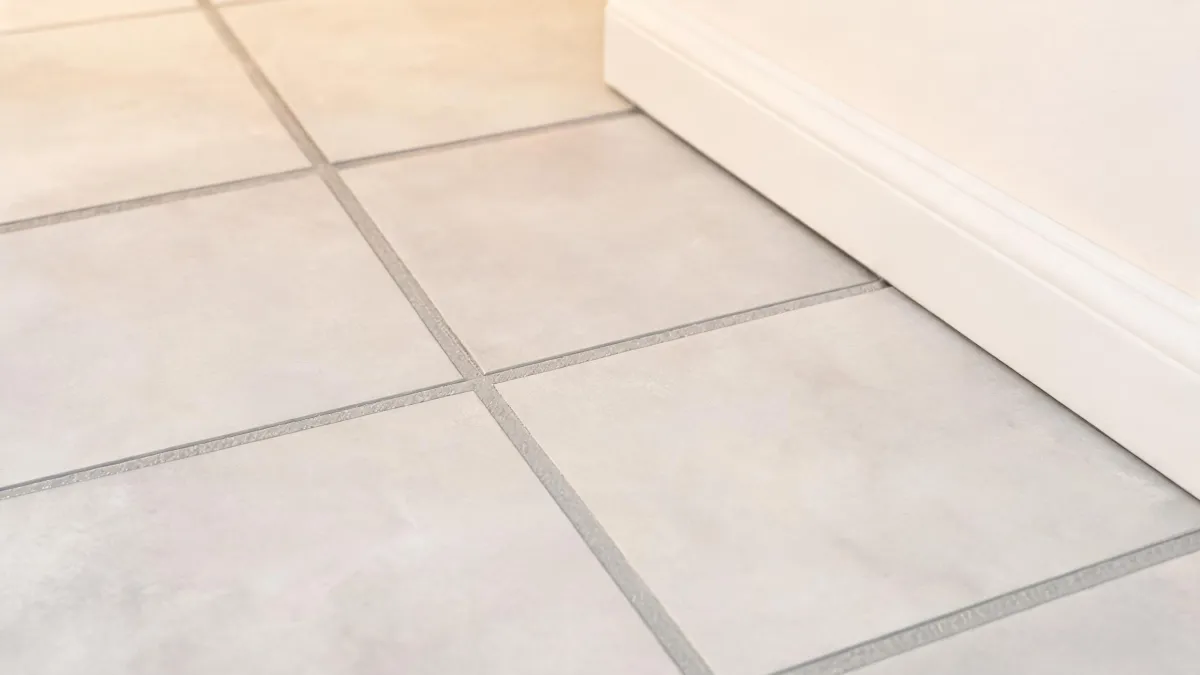
Marazzi tile Rice Bianco is a white marble-look porcelain tile. The appeal is the bright base and subtle veining. That means the print repeat and the whiteness of the base are checked on every run. We use a spectrophotometer, and the tolerance for white is tight—you can see yellowing at a Delta E of less than 2. If you need the same white on every wall and every order, this matters. A lot.
Rice Bianco is part of the Marazzi marble-look family. It’s designed to give you the stone aesthetic without the natural stone variability. You still get natural-looking movement in the pattern—that’s the point—but the shade, sizing, and flatness are controlled by the factory.
Brick veneer is different. Variation is the appeal. But it’s also a hiding place for defects. When you evaluate brick veneer manufacturers, ask to see the blend range, not just the hero sample. If the manufacturer can’t describe how many shades are acceptable in one pallet, expect surprises. Is that a deal-breaker? Not necessarily. It just means you need to set expectations with your customer before install.
Winner for repeatability: Marazzi tile.
Winner for character: Brick—if you can live with the range.
2. Physical Tolerances: What I Actually Measure
For tile, I rely on ASTM C648 for breaking strength and ASTM C373 for water absorption. Porcelain tile has an absorption rate below 0.5%, so it handles moisture well. But those numbers mean nothing if the tile is warped. I put a straight edge on every large-format sample and listen for a rock.
For thin brick veneer, the unit spec is often ASTM C1088. The installation details are just as important as the unit itself. Ask the manufacturer for the required mortar and the approved substrate details—not a one-line answer. Also ask about lot numbers. I keep a retained sample from every approved batch, tile or brick, because you can’t digitally compare colors on a phone screen.
If you’re ordering concrete blocks wholesale, ask for the compressive strength report from the actual lot. Don’t accept a generic sheet from the website. The block on the truck should match the certificate. I once saw 8,000 concrete blocks stored on a damp yard without covers. The blocks looked fine on the outside, but the edges were stained and rim-heavy with efflorescence. That wasn’t a material failure—it was a storage failure. The supplier still blamed the product.
Honestly, this part surprised me when I first started reviewing both materials. Manufactured tile is easier to keep consistent than natural brick veneer. The tile is fired and printed under controlled conditions. Brick veneer can pass a visual check while hiding cracked faces behind a “rustic” texture. So if anything, inspect brick harder.
Bottom line: tile gives you more reliable physical specs. Brick demands more auditing.
3. Order Flexibility and the Small-Buyer Test
Here’s a fact I’ve learned in four years: the customers we treated seriously when they ordered $200 in samples are the ones ordering $20,000 a few years later. Small doesn’t mean unimportant—it means potential.
Marazzi tile wholesale can be ordered by palette, not just by truckload. That helps a contractor test Rice Bianco on one bathroom before committing to a high-rise. For mosaic tile private label, you can also start with a smaller production run, but you should document the color consistency between runs in the contract. A sample board is not a commitment unless both sides sign it.
Brick veneer manufacturers are different. Some require a full truckload minimum. That can be fine for a big job, but it’s a red flag if the manufacturer won’t sell you a sample panel. Samples aren’t a favor. They’re a QC step. A supplier that says “our product is consistent, trust us” is asking you to skip the most important check.
Winner for flexibility: tile. A good brick supplier will get there, but you have to push for smaller test lots and written lead times.
4. Private Label and OEM: The Name on the Box Matters
If you’re building a mosaic tile private label brand, the tile might be the same. The packaging is where brands get hurt. I once found a batch of 900 boxes with the wrong barcode on the label. The tile was perfect. The label vendor had changed a digit. I said, “Print only the labels.” The operations manager heard “shrink-wrap and relabel the entire inventory.” Result: a 1,200-unit delay and a lesson about clearer instructions.
For tile or brick, the same rule applies: private label works when the spec includes packaging, barcode placement, pallet wrap, and carton markings. The inspection doesn’t stop at the product itself. If you’re doing an OEM program, ask how the manufacturer handles a packing defect. You own the brand reputation, even if you don’t own the factory.
Marazzi is set up for tile and adhesive labeling because the production lines already run custom SKUs. Brick veneer manufacturers can private label too, but you’ll need to verify the box marking includes the ASTM standard and the plant identification. If not, every claim about the product becomes your problem when something fails on site.
Bottom line: for private label, the manufacturer’s QC documentation matters more than the material.
5. Total Cost vs. Unit Price
It’s tempting to compare unit prices. But identical specs from different vendors can result in wildly different outcomes. The “always get three quotes” advice ignores the transaction cost of evaluating a new vendor. There’s value in a supplier who already knows your specs and doesn’t need to re-learn them every order.
Total cost includes freight, waste, installation, and rework. A cheaper brick veneer that arrives with 8% breakage isn’t cheaper. Similarly, a tile with beautiful color but sloppy sizing can double your install labor.
When you specify tile, the system cost matters. Marazzi makes tile adhesives and mortars too. Using the same brand for tile and adhesive simplifies compatibility, and it can lower the total installed cost. But I’m not going to tell you it’s always cheaper. It isn’t. You’re paying for consistency and supplier support.
What I often see on failed projects isn’t a broken product; it’s a broken substrate. The tile didn’t crack. The mortar bond failed because the backing moved. That’s why systems matter more than individual product prices.
If you choose brick veneer, ask the manufacturer for the installation details and the required mortar. Then get a labor estimate from a crew that has actually done thin brick, not just full brick. The product might be cheaper than tile; the labor might not be.
And if you’re also quoting concrete blocks wholesale, include the cost of storage. Blocks can survive weather; paper-faced tile and some brick veneers can’t.
Bottom line: compare installed cost, not material price. Marazzi tile as a system can be a better deal; brick can win on material price and lose on labor.
6. How to Evaluate Brick Veneer Manufacturers: A Short Checklist
- Ask for current ASTM C1088 test data from the actual plant, not the marketing department.
- Request a physical sample panel and leave it in the sun for a week before you approve it. Also put it against the other materials on your project.
- Look at the pallet wrap: water damage during transit is one of the most common brick veneer problems.
- Get the MOQ and lead time in writing. “About 6 weeks” is not a date.
- If they claim a green attribute, ask for the percentage and the substantiation. Per FTC guidelines (ftc.gov), environmental claims can’t be vague.
So Which One Should You Choose?
Choose Marazzi tile Rice Bianco when you need a clean, consistent surface, a documented shade range, and a partner that can support tile plus adhesive as a system. It’s also the stronger option for mosaic tile private label: the production lines are used to tight specifications and custom packaging.
Choose brick veneer when the project wants an industrial or timeworn look, and when you’re ready to audit the manufacturer properly. It can be a beautiful material. Just don’t treat “natural variation” as a catch-all for poor quality control. That’s not a material decision. That’s a supplier decision.
And if you need concrete blocks wholesale, be as demanding as you would with tile: ask for the compressive strength certificate, verify the batch number, and inspect one pallet before you authorize the whole load.
No material is perfect. No supplier is perfect. The way to avoid a bad surprise is to order a sample, put it through the same inspection you’d use on a full order, and treat every buyer—small or large—like the relationship matters. Because it does.