The fastest way to learn whether a building material supplier will actually deliver is one question, asked before the word “price” comes up: “Will you put your shade and dimension tolerances in writing?”
If they say yes, you’ve probably found a professional operation. If they say “our quality speaks for itself,” or “we’ve never had a complaint,” lower your expectations. I’ve learned the expensive way that quality that can’t be documented is quality that doesn’t exist.
I manage quality and brand compliance for Marazzi’s building material lines—porcelain tile, mosaic, concrete block, brick veneer, mortar, precast. In a typical year I review roughly 200 production lots before they ship, and in 2025 I rejected around 4% of first deliveries. Every one of those failures had the same root cause: the quality standard existed only in someone’s head.
So if you’re wondering what to look for in a brick veneer supplier, or how to vet a tile manufacturer, a concrete blocks private label partner, or a mosaic tile distributor, here’s the short answer. Stop comparing samples and start comparing written specifications. Samples show what a vendor wants you to see. Written tolerances show what you’ll actually get.
The shade that cost us a month
In the spring of 2023, we approved a charcoal concrete block sample for a private label program. Architectural block, where color isn’t an afterthought—it’s the product. The sample was perfect.
The first production run looked fine too, at least under the factory’s lighting. It wasn’t until the pallets sat in daylight at the distributor’s yard that the truth showed up: the blocks were three shade steps darker than the approved master. Our tolerance was one step.
We rejected about 8,000 units. The factory took the batch back and re-ran it at their cost, but no invoice ever covered the lost month or the customer’s delayed schedule. That month changed how I qualify suppliers. Now every contract includes a written shade range, a physical reference sample, and the supplier’s signature on both.
Porcelain tile: white isn’t just white
Porcelain is the category where sample boards mislead people the most, because a single tile looks deceptively simple.
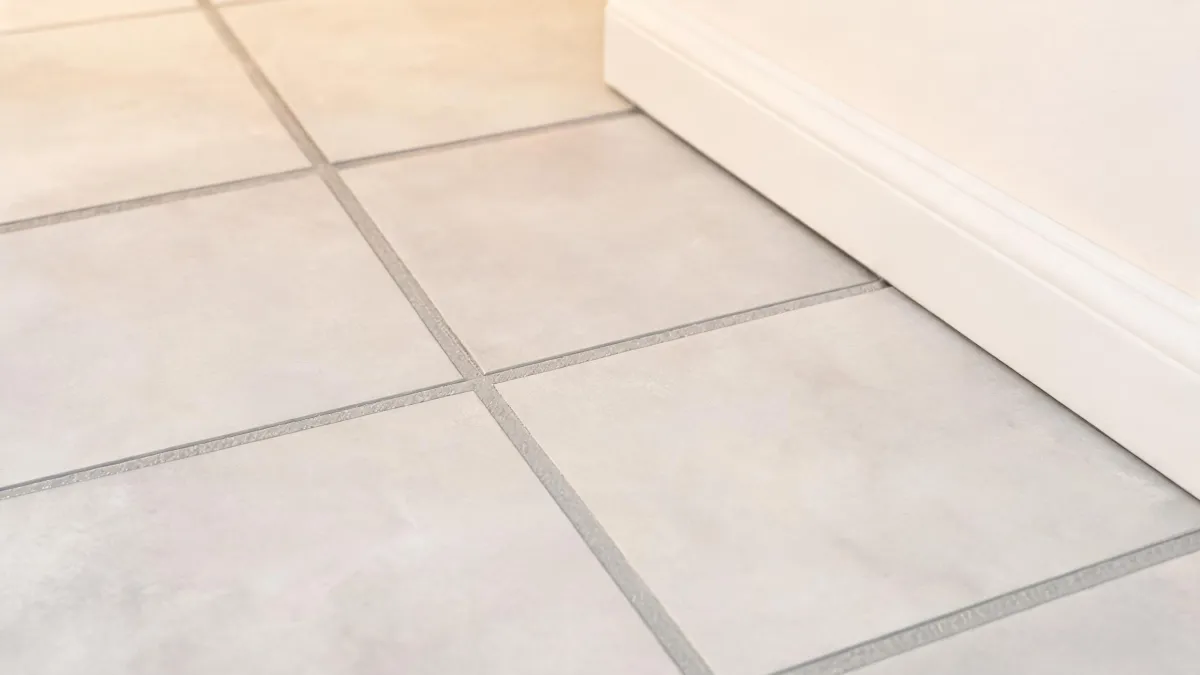
Take Marazzi antique white tile, one of the lines I sign off on regularly. White sounds simple—until you line up two production runs from different months. One leans warm, one runs cool or gray. Neither is wrong; they’re just different. If the plant doesn’t sort by shade group, those different tiles can show up in the same delivery.
When I review a Marazzi tile lot, or audit a factory that wants to supply us, I look for three things:
- Shade grouping. Every production run should be compared against a physical shade master and labeled by group. Ask the supplier how many shade groups that SKU runs. If they can’t answer, they’re not tracking it.
- Size-group labeling. Rectified porcelain needs consistent dimensions for consistent joints. The plant should sort and label size groups so product from different dates doesn’t get mixed into one pallet without anyone noticing.
- Written tolerance numbers. The tile industry has published standards for flatness, squareness, and dimension ranges—ANSI A137.1 is the usual reference. A good supplier can quote their internal numbers without opening a manual.
A sample proves a factory can make one nice tile. What you’re really buying is the ability to reproduce it, and that shows up in documents, not on sample boards.
Concrete blocks private label: you can’t outsource accountability
Concrete blocks private label agreements fool otherwise careful buyers. It’s easy to think of blocks as a commodity: the factory makes them, we put our name on them, done. It isn’t done. Private label doesn’t change the block. It changes who owns the problem when the block is wrong.
When I audit a plant producing blocks for our private label programs, I ask for test data from at least three recent production batches, not a single certificate from the plant’s best month. Compressive strength, absorption, dimensions—I want to see whether the numbers stay tight. If they bounce around, the plant is flying by feel, and the first sign will be a failed inspection or a wall that doesn’t match.
For colored units, the same shade logic applies as with tile. Ask how pigment is batched, how often the mix is verified, and—this is the question most buyers never think to ask—what the plant does with out-of-spec units. If they say the units get crushed, that tells you more than any brochure.
A mosaic tile distributor should have answers, not excuses
Mosaic is a different buying scenario because you’re often buying from a distributor, not the factory. The factory makes the tile. The distributor curates the inventory, and that’s where quality gets won or lost.
Ask a mosaic tile distributor how they handle dye lots. Do they mark lot numbers when goods arrive? Do they keep shipments separated, or do they dump new stock into old stock the moment the carton opens? Do they sell a full box that was opened to refresh a display, or do they hold it for samples?
The best test I know: ask to see two boxes of the same mosaic that arrived in different months. A good distributor can tell you which dye lots they are and why they differ. One that shrugs is telling you how your next job will go.
What to look for in a brick veneer supplier
Brick veneer is where I see the biggest gap between what buyers think they’re getting and what the supplier is actually able to deliver. The material looks forgiving. It isn’t; it’s kiln-fired, and color and dimension can vary run to run.
- Ask for the standard. Clay thin brick should meet the relevant material standard—ASTM C1088 covers thin brick units, and ASTM C216 covers full-size facing brick. A supplier who doesn’t know which standard applies probably hasn’t thought much about durability.
- Check the weathering grade. For exterior use in freeze-thaw climates, you want units rated for severe weathering. The grade letters look like alphabet soup, but they exist to prevent spalling and premature failure.
- Demand blending instructions. A responsible supplier tells you how to blend pallets on the wall so color variation reads as texture, not as a mistake. No instructions should be a red flag.
- Confirm the accessories match. Corners and trim pieces should come from the same production run as the field brick. Otherwise the trim will stand out for the wrong reason.
One closing question for any brick veneer supplier: “Can I see two separate production runs of this same brick, side by side?” A supplier confident in their process will say yes. A supplier who wishes you hadn’t asked just gave you the answer.
When you can relax about the paperwork
Not every product needs this level of control. Handmade tile, tumbled stone, and reclaimed brick are bought because they’re not uniform, and demanding tight shade ranges there would be silly.
Even those suppliers know their product’s limits, though. Ask them where the variation falls. Listen for the difference between “we don’t document that” and “we’ve never thought about it.” One can be a great partner. The other is a gamble.
And the paperwork never replaces the receiving check. When the delivery lands, open cartons from a few different pallets and look at what you actually got. That habit catches more problems than any certificate ever will.