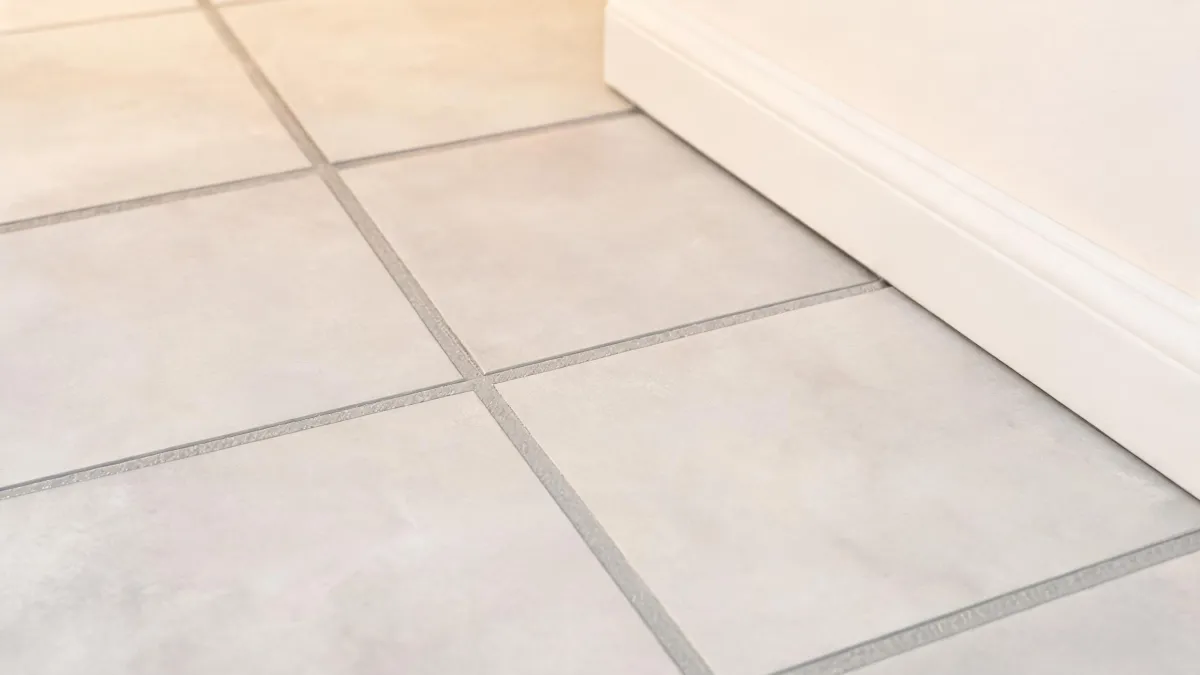
If you've ever compared quotes for a bulk building materials order and wondered why the lowest number somehow costs the most by the end, this one's for you. I'm a procurement manager at a mid-sized construction supply company, and I've spent about six years—maybe five and a half, honestly—managing a materials budget and chasing down the hidden costs that don't show up on a quote. These are the questions I wish someone had answered before I placed my first bulk Marazzi tile order.
- Is Marazzi tile worth it for bulk orders?
- How should I spec concrete blocks for a commercial project?
- What's the smart way to buy bulk mosaic tile?
- How do I know a Marazzi Classentino Marble lot will match?
- How do I evaluate mortar mix manufacturers?
- Why is TCO more important than per-unit price?
- Do I really need a sample order before every big purchase?
- How many quotes should I get before committing?
Is Marazzi tile worth it for bulk orders?
Honestly, it depends on what you're comparing. Marazzi's design-led collections, especially the Classentino Marble line, give you the look of natural stone without the maintenance or the price tag. But for B2B buyers, the real value is consistency. When you order by the pallet, you're betting every box matches. In my experience, Marazzi is pretty good on that front, but I still ask the distributor to confirm the same production batch before I commit. That's not a brand warning—it's just tile 101. You don't want to find out two weeks into an install that the shades don't line up. If you're comparing Marazzi against a lower-priced import, remember that installation cost is the same—or higher—when you're working with inconsistent tile. The material is a small slice of the total floor cost.
How should I spec concrete blocks for a commercial project?
Start with ASTM C90. That's the standard for loadbearing concrete masonry units, and it covers compressive strength, density, absorption, and dimensional tolerance. Don't just write "CMU" on your spec and call it done. You need to know the grade, the strength your engineer is expecting, and whether you want normal-weight or lightweight units. I've had it happen once—the block arrived and no one had checked the strength until the inspector flagged it. That's a costly stop-work order. So get the spec in writing, share it with your supplier, and ask them to confirm compliance before production. Also, ask about allowable tolerances for chippage—some projects can live with it, but a spec'd face finish means more rejects.
What's the smart way to buy bulk mosaic tile?
Buying mosaic by the sheet seems like a bargain because the per-square-foot price looks low. But here's what you need to know: factor in waste. With small tiles, you lose more to cutting and breakage than you do with large-format planks, especially around edges and fixtures. I use a 10–15% waste factor for mosaic, versus maybe 7% for large tiles. And if you're buying multiple boxes, ask if the sheets are all from the same dye lot. Otherwise, you can end up with a floor that looks different every few rows. That's a rework cost, not a tile cost. If you're tiling a backsplash, the waste factor is different than for a large open floor. Know your layout before you guess.
How do I know a Marazzi Classentino Marble lot will match?
Marazzi's marble-look porcelain is a printed product, so variations between production runs are real. Actually, that's true for any large-format tile, not just this collection. The fix is simple: ask for the production batch code, not just the color name. I made that mistake once, and it cost us two weeks of schedule. The second delivery was noticeably warmer in tone, and we had to split it between two rooms to make it work. Now I request batch codes in writing before any bulk order. If a distributor can't provide one, I treat that as a red flag. And if your supplier can't confirm the batch, don't be afraid to split the order into two separate jobs. It saved my schedule once.
How do I evaluate mortar mix manufacturers?
Price per bag is the worst starting point. What matters is whether the mix meets ASTM C270, the standard for mortar for unit masonry, and whether the manufacturer can actually prove it. I look at four things: test reports, batch-to-batch consistency, delivery reliability, and what happens if a load arrives late or off-spec. In 2023, I picked a supplier based on a low quote, and two of their batches had noticeably different workability. The inspector made us re-test the masonry. That "savings" disappeared fast. Now I treat a manufacturer's technical support as part of the cost. Also ask how they package and deliver the mix—dry stack bags are easier to manage than damaged pallet wraps that let moisture in.
Why is TCO more important than per-unit price?
Because the lowest quote is usually the one with the most asterisks. It took me maybe six years and a couple hundred purchase orders to fully understand that. Beyond the base price, you're paying for freight, handling, rework, delays, and the time your team spends solving problems. Say a tile quote saves you $0.30 per square foot. If 3% of the order arrives damaged and your crew has to pause while replacements ship, that savings is gone. I've made that mistake. Twice. Now I build a simple TCO spreadsheet for every major purchase. The "cheap" option has to prove itself, not the other way around. I also factor in the cost of my own time. An hour spent chasing a vendor is an hour not spent on the next project.
Do I really need a sample order before every big purchase?
Yes, and I don't care how small the order is. A sample board or a single box is the cheapest insurance you'll ever buy. It verifies color, texture, thickness, and—if you're really smart—how it cuts. I learned that after skipping a sample for a tight deadline and ending up with mosaic sheets that had a paper facing we didn't expect. It sounds minor, but it threw the whole install schedule off. For Marazzi stone-look tile, I always ask for a sample from the actual batch I'm buying, not a marketing display in a showroom. They're usually close, but close isn't good enough when it's on the floor. Ask for cut samples too, if the tile will be fabricated. A printed pattern can look different on a beveled edge than on the flat face.
How many quotes should I get before committing?
Three minimum, but it's not about the number—it's about what's inside the quote. I compare line by line: product, batch code, freight, taxes, unloading time, and what happens if you need to return unused materials. In 2024, I compared five vendors for a block order. The second-lowest price had a $600 "documentation fee" hiding in the terms. When I called them out, they removed it. That alone covered the cost of the comparison. You don't need to burn days on this. A simple checklist and one spreadsheet pass is enough to catch the stuff that looks small and costs big. I usually ask one question in the same email to every vendor: "Does your quote include all fees and the exact product description?" The response tells you who actually read the spec.