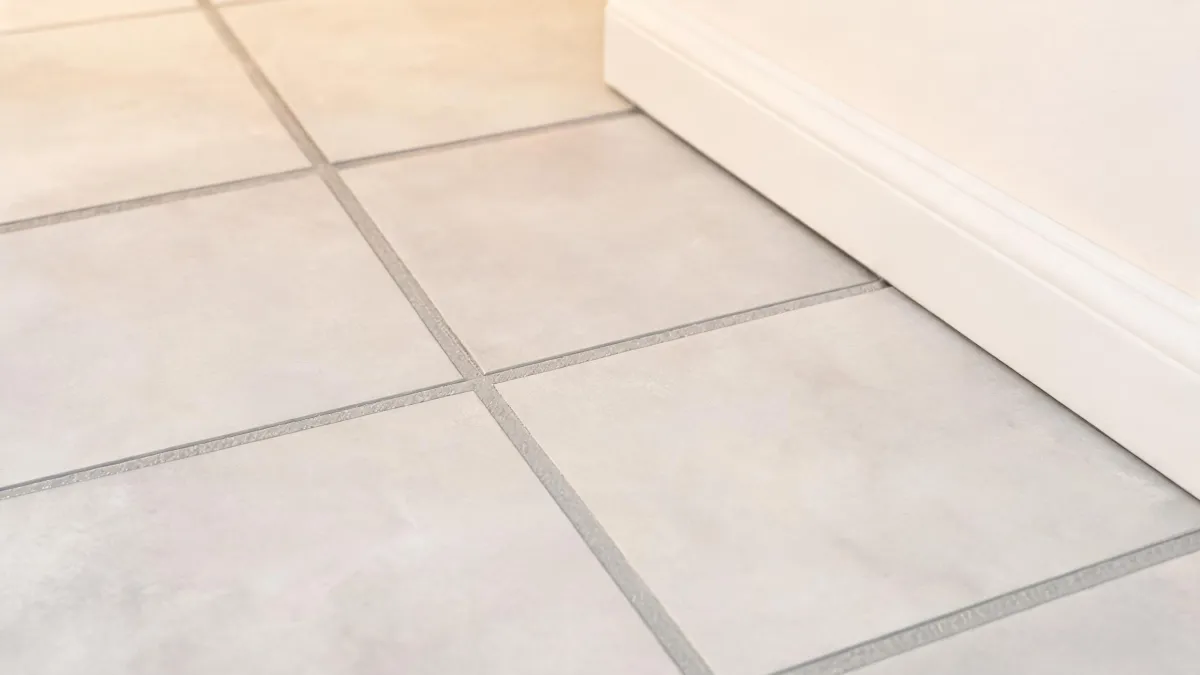
Here's a sentence I hear too often in this industry: "This tile works for everything." It doesn't. It never does. And when a sales rep or a supplier tells me that, I'm not impressed. I'm worried.
I'm a quality and brand compliance manager at a building materials manufacturer. I review every tile line before it reaches distributors—roughly 200 unique items each year. In 2024, I rejected 12% of first-run production batches. Not for visual defects. For specification mismatches, where the marketing sheet promised more than the tile could actually deliver.
Somewhere along the line, "universal" became the selling point, and "honest" became an afterthought. There's one sentence I look for on every porcelain tile specification sheet: "not intended for…" The spec without that sentence is the one I reject. Give me a tile with honest limits over a tile that claims to have none. Every time.
The "Universal" Porcelain Tile Doesn't Exist
I've seen porcelain tile marketed as suitable for everything from outdoor patios in freeze-thaw climates to commercial kitchen floors. That's like saying one pair of shoes works for hiking, formal events, and a basketball court. Technically, you could wear them everywhere. But you'd be miserable, and you'd probably injure yourself.
Porcelain tile specifications aren't just features—they're limits. The PEI rating tells you how much foot traffic the tile can withstand. Water absorption tells you whether it can survive freezing. The dynamic coefficient of friction, or DCOF, tells you whether someone is going to slip in a wet entryway. Each number draws a boundary, and boundaries are what make a product usable.
In my first year, I made the classic specification error: I assumed "standard" vitrified porcelain was fine for a commercial kitchen floor because the data sheet said "suitable for commercial use." I didn't verify the DCOF. The tile looked beautiful and performed horribly—the surface was dangerously slippery once oil and water hit it. The redo cost us $22,000 and a distributor who still brings it up. I want to say the year was 2019, but don't quote me on the exact date. What I won't forget is the pattern: a spec written to impress, not to inform.
That was the last time I approved a product based on a label instead of a test report. Now every tile line gets the same treatment: physical sample, spec sheet, third-party test data, and a conversation about where it should and shouldn't be specified. If the "not intended for" line is missing, consider it a red flag.
The $0.30-Per-Square-Foot Lie
I see the same false economy when buyers want one tile for an entire project—the patio, the entryway, the bathrooms. They pick a single "all-purpose" porcelain tile and save maybe $0.30 per square foot compared to selecting a purpose-built tile from the Marazzi Stone collection for exterior areas and a glazed porcelain for wet interiors.
Except it isn't a saving. In one case, the all-purpose tile wasn't frost-resistant enough for an exterior walkway. After one winter, hairline cracks appeared. Replacing it cost the distributor $11,000 more than buying two purpose-specific tiles from the start. (Should mention: that $11,000 included labor, disposal, and reinstallation, not just the tile.)
The $0.30-per-square-foot "saving" turned into a net loss of $3.20 per square foot once the replacement was done. Or rather, the buyer's saving became their loss—and our reputation took the hit too.
There's no such thing as a free lunch in tile. A product that names its limits is something you can build a project around. A product that doesn't will show you why that matters at the worst possible time.
Compliance Documentation Is the Product
Now for the part that gets pushback from sales teams: ceramic tile compliance requirements. I treat compliance as part of quality control, not paperwork. A spec sheet isn't a marketing brochure; it's a legal document about product performance.
Take environmental claims. Per FTC guidelines (ftc.gov), claims like "recyclable" or "eco-friendly" have to be substantiated. What I do not accept is a spec sheet that hides the tile's limits. The FTC Green Guides (16 CFR Part 260), for example, require that a "recyclable" claim is truthful only if recycling facilities are available to at least 60% of the consumers in the area where the product is sold.
I've rejected two product concepts because we couldn't substantiate the marketing team's environmental claims. It wasn't a comfortable conversation. But I'd rather have it internally than explain to an FTC investigator why a claim on our packaging was unverifiable. Distributors who spec Marazzi tile answer to architects, and architects answer to building codes and procurement standards. Solid compliance documentation protects everyone downstream.
And it's not just environmental claims. It's slip resistance, water absorption, breaking strength, frost resistance. Every performance number on our spec sheet has a test method behind it. If it doesn't, the claim doesn't ship.
Part of me understands the resistance. Compliance adds time and cost to every product launch. But I've also seen distributors choose us specifically because our paperwork holds up. In one bidding process, the client's procurement team asked both suppliers to verify performance claims. We sent our documentation the same afternoon. The competitor's response arrived three weeks later—and it simply repeated the claims instead of proving them. That's the commercial value of clean compliance.
Dodged a bullet last winter, too. I caught a mismatch between a batch's actual water absorption rate and the value printed on our spec sheet about an hour before the shipment was scheduled to leave for a mountain-state distributor. If that tile had been installed outdoors and frozen, the damage would've been catastrophic. I still think about how close that was.
But Don't You Lose Deals by Saying "No"?
Sales colleagues have asked me that for years: "Can't we just say it's suitable for light commercial?" My answer is always the same: No, because someone will install it in a heavy commercial kitchen anyway, and then we're both in trouble.
I know it feels like a missed opportunity when we decline a project that doesn't fit a tile's strengths. But I've learned the opposite over time. A vendor once told me, "This isn't our strength—here's who does it better." That honesty earned my trust for everything else. I've never forgotten it, because it's so rare. Most suppliers say yes to whatever you ask.
I've had distributors tell me they appreciate the pushback. "Better that you say no now than we deal with a callback later," one said. That's stayed with me.
There's a difference between acknowledging limits and being limited. Marazzi's range is broad—marble-look porcelain, wood-look planks, hexagon and terrazzo collections, plus adhesives and setting materials. But each product in that range has a defined scope. A distributor can get everything they need from us for a project without us pretending one tile fits every condition. That's what makes our porcelain tile specifications reliable.
The supplier who says "this product isn't right for that job, but this one is" is the supplier you call back. The one who says "it'll be fine" is the one you're stuck with when it isn't.
Build On a Spec That Knows Its Limits
Next time you're evaluating porcelain tile, don't look for the spec sheet with the longest list of applications. Look for the one that names its boundaries. The manufacturer that tells you what a tile can't do—before you discover it on site—is the one that actually respects the people buying it.
We've been making tiles for a long time, and the biggest lesson hasn't changed: respect the boundary between what a product can do and what you hope it can do. The project will find that boundary eventually. The question is whether you find it during the spec review or in the field.
If you want a Marazzi tile that's right for your project—with honest documentation and straight answers about what it is and isn't designed for—that's exactly what we do. It's not the easiest conversation in the world. And that's a good thing, because in this industry, trust is the one specification you can't fake.