I manage purchasing for a building material distributor in the Southeast, roughly $2 million in annual orders across 11 vendor relationships. I process 60 to 80 POs a year for tile, adhesive, mortar, masonry block, and related site material. This guide is not from a consultant's chair. It is from the desk where quotes get checked and delivery mistakes get sorted out.
Before I place another order of Marazzi glazed porcelain tile 6x24 or bulk concrete blocks, I run the same checklist. The products are different, but the buying mistakes are not. If you are building your own concrete blocks distributor buying guide, start here: six checks, and do not skip any step just because the supplier sounds confident.
The six-check distributor buying process
1. Force every quote into the same unit
The first question I ask is not about discounts. It is about units. A tile quote can be per piece, per box, per pallet, or per square foot. A concrete block quote can be per block, per pallet, per ton, or per thousand. If you compare quotes without converting them, the numbers are basically decoration.
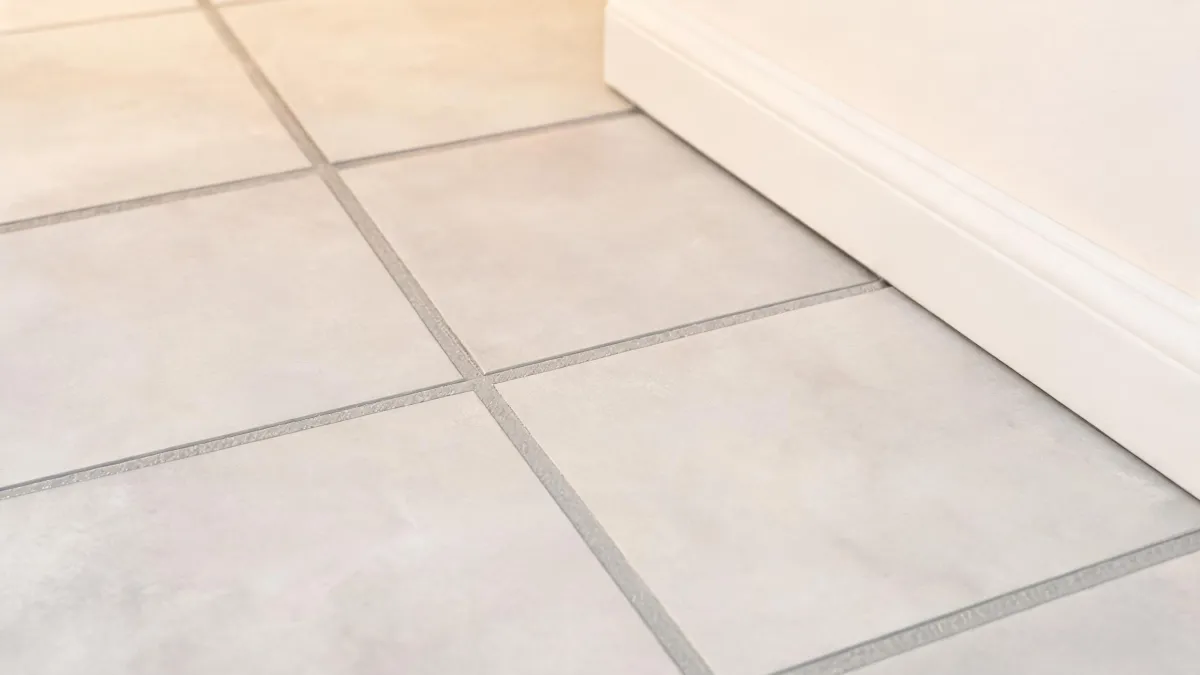
For Marazzi glazed porcelain tile 6x24, I ask for price per square foot, pieces per box, square feet per box, and boxes per pallet. Since a 6x24 tile covers roughly one square foot before grout joints, the math is easy to spot-check.
For mosaic tile wholesale, the same rule applies with more details. Ask for sheet dimensions, number of tiles per sheet, mesh type, square feet per carton, and cartons per box. If one supplier quotes by the sheet and another quotes by the square foot, you have not received two prices. You have received two puzzles.
For bulk concrete blocks, I request the block size, price per block, blocks per pallet, and pallet coverage for the wall assembly I plan to sell. The price list only starts making sense after those numbers are on paper.
2. Confirm the lot number before you trust the SKU
The SKU keeps inventory clean, but it does not guarantee that every box looks exactly the same. Glazed porcelain tile is made in batches, and each production run can have a slightly different shade. This matters more with a long plank like Marazzi glazed porcelain tile 6x24 because color differences show up as visible bands across a floor.
Here is the part I learned the hard way. Everyone told me to check lot numbers before ordering a full project quantity. I skipped that step because the supplier had enough stock and I wanted to get the order moving. Two pallets arrived with two different lot codes. The tile looked fine in the boxes, but once it went down, the area around the second pallet was visibly cooler than the first. The installer had to sort and mix the remaining tile, and the extra labor was on me.
Now I ask one simple question on every Marazzi tile PO: are all cartons on this order from the same shade lot? If the answer is no, I ask for lot numbers by pallet and decide whether we can blend them before installation. I do not leave that decision to chance.
Bulk concrete blocks have their own version of this issue. Plain gray blocks can vary by batch, and colored or ground-face blocks can vary even more. If the block will be visible after installation, ask for a batch sample and confirm that all pallets come from the same production period.
3. Price the delivery before you price the material
I have almost signed for a lower per-block price from a distant supplier and then discovered the delivery quote made the entire order more expensive than buying from the distributor down the road. Freight can be a bigger line item than the product for low-value, heavy materials like bulk concrete blocks.
Ask for a delivered price at the exact receiving address. Then ask what the truck arrival situation looks like. Does the quote include a liftgate? Will the driver wait while you unload? Is there enough room for a full trailer to turn around? In some cases, a full truckload is cheaper per unit but not right if your yard can only take one pallet at a time without a forklift.
If you have ever stood next to a flatbed full of block with no forklift, you know the last thing you want is a surprise accessorial charge. I write this into every RFQ: price delivered, with enough detail to tell me exactly what happens when the driver arrives.
4. Ask for documents that prove the product is suitable
A brochure is not the same as a product data sheet. For commercial work, I need paperwork before I place the order, not after. If the supplier has to go ask the factory, that is fine, but I want to hear that answer before payment.
For tile, a useful baseline is the manufacturer's product data sheet and the referenced tile standard. The Marazzi product pages and distributor spec sheets are good places to start. If someone says they carry Marazzi glazed porcelain tile 6x24 but cannot produce the manufacturer's spec sheet, I keep moving.
For concrete blocks, in the United States load-bearing concrete masonry units are commonly specified under ASTM C90. According to ASTM International, C90 is the standard specification for load-bearing concrete masonry units. If your project needs a specific type of unit, ask for the supplier's current documentation showing that the block meets the standard that the drawings call out. That includes strength grade, density, and any other properties required by the project specification.
5. Define what mosaic tile wholesale includes
Mosaic tile wholesale is one of those categories that sounds simple until a quote arrives. A mosaic is more than a pattern. It is a sheet, or it can be loose individual tiles. The sheet size, tile spacing, mesh backing, and lot number all matter.
When I receive a mosaic tile wholesale quote, I ask for these details: sheet size, number of tiles per sheet, net coverage per sheet, sheets per carton, mesh material, and lot number for the full carton quantity. I also ask what happens if a later order needs more material. Mosaics are more sensitive to lot differences than most buyers expect.
Here is a sentence I use when talking to a supplier: If I order 20 cartons now and need 5 more in four months, will those match the current carton's lot? If the supplier avoids the question, that tells me something before I spend the money.
6. Do a pilot run before you build a stock line around it
This is the step that gets skipped when the price seems special. The supplier's quote can look great on paper. But I still want to verify how the product arrives, how the order acknowledgement looks, and how the paperwork matches. A pilot order can be a few boxes of Marazzi glazed porcelain tile 6x24 from the exact lot, or one pallet of block from the supplier's current stock. If the supplier is serious, they can handle this without pushing back.
For mosaic tile wholesale, do not use a tiny showroom sample as your pilot. Order a full box or a full carton from the current production lot. That tells you about packaging, labeling, and edge quality. A sample made in a different run can look completely normal and still not tell you what you will sell.
If a deadline makes a pilot impossible, get references for orders of similar size and call two of them. Ask specifically about delivery condition, lot consistency, and how the supplier handled damage claims. It is not the same as a pilot, but it is better than guessing.
Where this checklist has limits
This process reflects my experience buying for regional distribution in the U.S. If you are importing containers, ordering overseas production, or working with large public works, add customs, lead time, factory traceability, and local code requirements. I can't say every step applies everywhere.
I also do not believe there is a single best supplier for Marazzi tile and bulk concrete blocks. The right fit depends on your quantity, delivery pattern, storage space, and the customers you serve. Honest limitations usually become clear in the pilot order.
If you use this list and still get surprised, keep the record. What caused the surprise? Over time, the pattern shows up. My own files are full of notes to self from exactly that process.