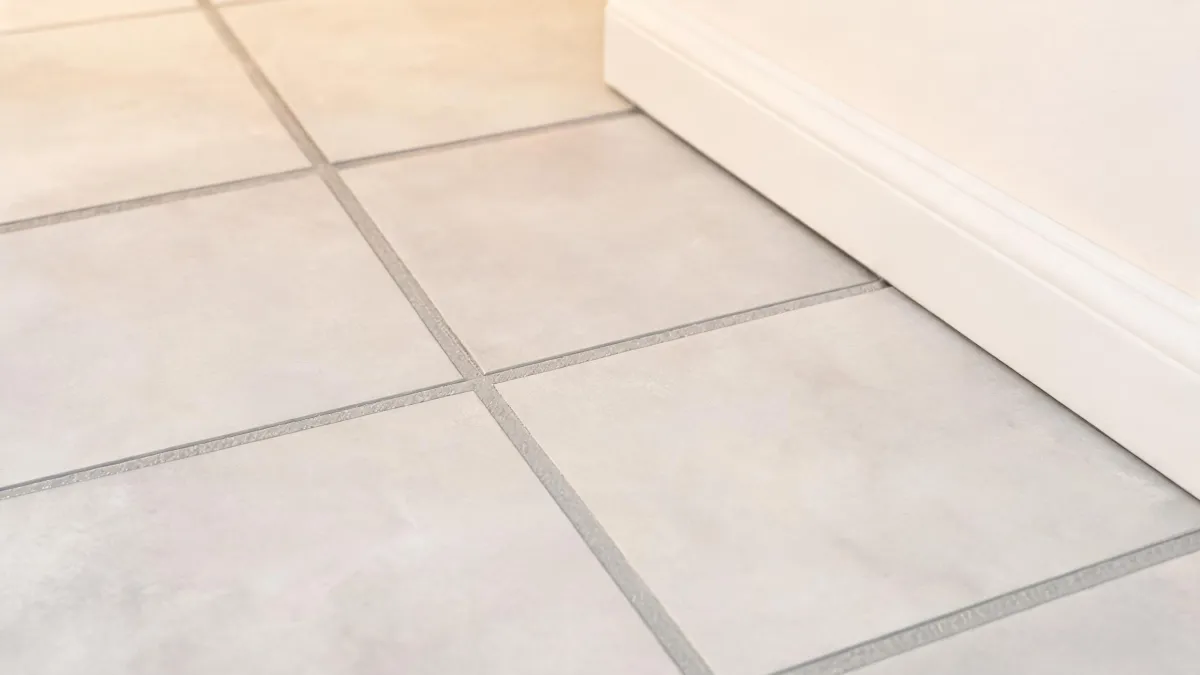
Marazzi Marble Obsession Arabescato is usually not where an installation fails. I say that after years of reviewing product batches as a quality/compliance manager in building materials. The visible tile is rarely the problem. The failure almost always starts in the mortar mix specification or on the surface of the precast concrete behind it. If those are wrong, no tile pattern will save the project.
Here is the conclusion I keep repeating to specifiers: choose Marazzi tile for the look, but write the substrate and bonding specifications as if the tile were invisible. On a 5,000 sq. ft. commercial lobby, a bond failure or out-of-tolerance precast panel can easily cost more to repair than the entire original tile package. And those repair calls usually happen after everyone has stopped looking at the design intent.
Why I'm the One Asking These Questions
I'm a quality/compliance manager at a building materials manufacturer that produces tile, adhesives, mortar, and precast concrete elements. I review roughly 200+ unique product batches each year before they are accepted. In our Q1 2024 audit, 9% of first deliveries missed part of the written specification—and the cause was rarely the tile itself. It was a substituted setting material, an undocumented precast mix, or a dimension that fell outside tolerance.
I know product specs get substituted all the time. That is why I check the actual bags on site, not just the submittal. Last year, an installer said they were using the mortar we approved. What we found was an unmodified dry-set product. When I asked why, the answer was: 'It's basically the same.' It isn't. The label was different, the standard was different, and the risk was different.
The Biggest Misconception in Tile Specification
People think expensive tile fails less often than cheap tile because the materials are better. That thinking comes from an older project era when most tile was small-format and more forgiving. Today, large-format porcelain can be beautiful and still delaminate if the system under it does not do its job. The old assumption was that tile quality caused installation success. In reality, the installation system—and the written spec behind it—causes the outcome that buyers often attribute to the tile itself.
I have also seen the reverse: inexpensive tile installed over a properly designed, well-bonded substrate can outperform an expensive tile on a bad one. That is not an argument for cheap tile. It is an argument for paying attention to the invisible parts.
Marazzi Marble Obsession Arabescato: A Porcelain Surface That Demands a System
Take one of the most beautiful porcelain patterns in our catalog: the Marazzi Marble Obsession Arabescato collection. It looks like natural marble but it is a dense, low-absorption porcelain. That surface resists staining and etching better than many natural stones, which makes it a great option for lobbies, bathrooms, and feature walls. It also means the setting material must be chosen for porcelain, not for general tile.
Large-format porcelain requires full support. A thin-set mix that works fine for a 6-inch ceramic mosaic may not provide enough shear strength for a 24 x 48-inch panel. The tile might look perfectly flat on the day of installation, then lippage and hollow spots can appear as the weak bond fails. That is not a product defect. That is a specification failure.
Mortar Mix Specification Guide: Four Lines I Want to See
A mortar mix specification guide is not a list of premium products. It is a set of boundaries that protect the project from well-intentioned improvisation. For commercial projects with large-format porcelain, these are the four lines I want in the contract:
- Name the standard. For large-format porcelain, I typically require a modified dry-set mortar meeting ANSI A118.15. For smaller tile, ANSI A118.4 may be enough when the tile manufacturer allows it. Write the exact standard into the contract, not just into a PDF that nobody reads.
- Set the water limit. Mortar mix failures often start with too much water on the job site. Say this: 'Mix only with clean water, within the range printed on the bag. Do not add extra water or admixtures.' A loose, over-watered mix spreads easily but bonds poorly.
- Define coverage. Interior floor tile should have at least 95% mortar coverage, and wet areas and exterior installations should have full coverage. Spot bonding is not acceptable for large-format porcelain. The old 'butter and dab' method has no place in a Marazzi tile specification.
- Require written approval for substitutes. If the specified mortar is out of stock, the replacement must be approved in writing before it is used. Verbal approval is not approval. I have seen too many substitutions happen because someone on site decided that one bag looks like another.
How to Vet a Precast Concrete Manufacturer Before You Trust the Panel
Precast concrete is factory-made, but it still has tolerances. When you are evaluating a precast concrete manufacturer for a project that will receive tile, ask for these three things in writing:
- Flatness and squareness tolerances. A panel can look straight against a length of string and still be out of plane enough to create lippage under a 24-inch rectified tile. Ask the manufacturer what number they guarantee. If they say they do not measure it, that answer is a red flag.
- Surface condition. Curing compounds and concrete release agents can leave a film that prevents thin-set mortar from bonding to the precast concrete. State that the surface must be clean, sound, and free of bond-inhibiting residue before tile installation. If the finish is too smooth and burnished, require mechanical abrasion or a manufacturer-approved textured finish.
- Curing and handling records. A good precast concrete manufacturer can show you mix records, strip times, and curing logs. That documentation matters because concrete shrinkage and early-age movement can affect the dimensional stability of the surface that receives the tile.
Precast concrete is not forgiving just because it is hidden under the finish. In a tile assembly, the substrate is a structural part of the system. If the precast concrete manufacturer treats tolerances casually, the tile contractor inherits the problem.
Do the Math on What Cheaper Actually Costs
Here is a simple calculation I use when someone wants to save money with a lower-grade mortar. Suppose the correctly specified modified mortar adds $0.50 per sq. ft. compared with the cheap product. On a 20,000 sq. ft. floor, the apparent saving is $10,000. Now suppose only 5% of that floor has a bond failure because the mortar was not rated for the tile size and use. Removing and replacing 1,000 sq. ft. of large-format porcelain at a realistic repair cost of $15 per sq. ft. costs $15,000—before color matching, downtime, and delay. The savings disappeared.
I make the same argument with precast concrete. A manufacturer who takes $2,000 off a bid but delivers panels that need days of grinding and leveling to accept thin-set has not saved you money. In the tile world, rework costs are almost always higher than the material savings that created them.
Where This Advice Should Not Be Used as an Excuse
If your project is a small residential powder room with 6-inch ceramic tile over drywall, you do not need to put a precast concrete manufacturer through a full audit or buy a premium large-format mortar. Use the standard that fits the tile size, substrate, and service condition.
And I am not saying the most expensive product is always correct. There are times when a lean specification is the right specification. What I object to is guessing. If a cheaper material can prove that it meets the same standard under the same conditions, it is a legitimate option. But make it prove that before the order, not after the callback.