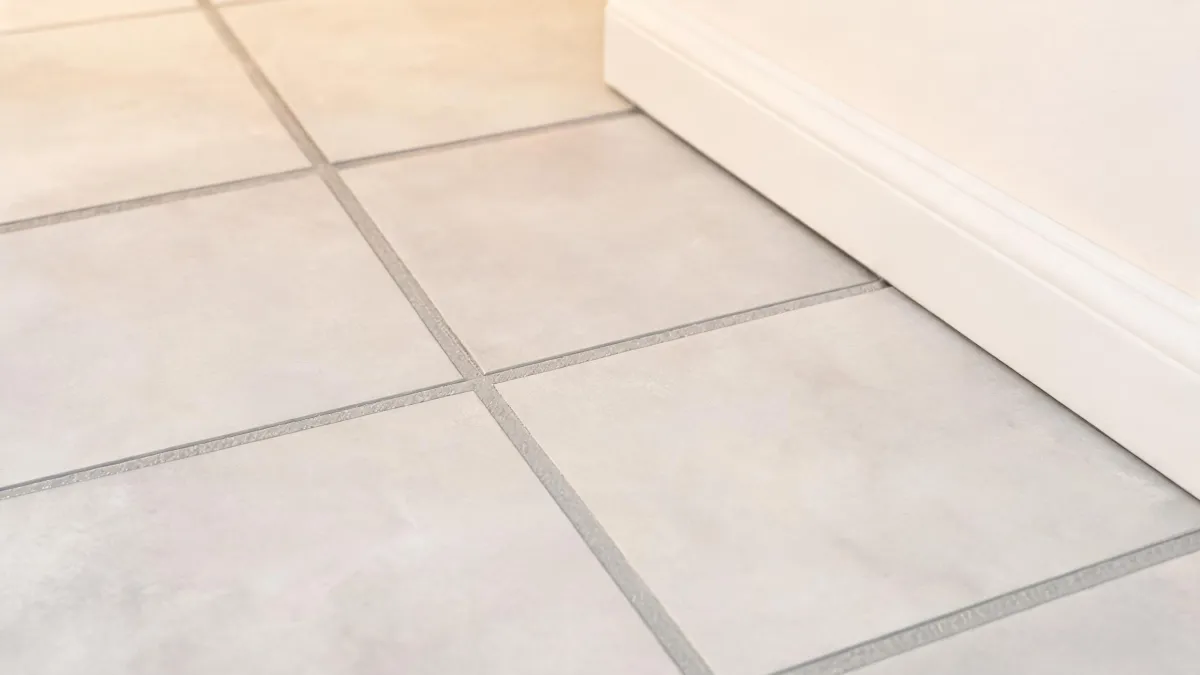
In November 2024, I got an email with the subject line: Marazzi Moroccan Concrete Off White — ORDER BY FRIDAY.
The body was shorter than the subject. It had a photo of a 12×24-inch concrete-look tile, one line from the finish schedule, and a note from the senior designer: “Elevator lobby and corridor. Need 1,700 sq ft. Owner walkthrough is December 15.”
I am the office administrator for a 92-person design-build firm. I manage purchasing, process 60 to 80 orders a year, and report to both operations and finance. I know which vendors send clean invoices. I know how to get office furniture approved. I do not know tile.
It took three weeks to realize how much I didn’t know. This is what that education cost.
Color names are not commercial tile specifications
When I started, “Marazzi Moroccan Concrete Off White” sounded like a complete product description. It had a brand, a collection, and a color. I asked three suppliers for exactly that.
The first useful quote came from a wholesale tile vendor. The sales rep said, “I can get you the same concrete look at a lower price. We private-label it, so the box won’t say Marazzi.” In the same phone call, she also said the word OEM. I let those two words blur together. That was my first mistake.
The quote from the Marazzi distributor was $4.16 per sq ft and came with a product data sheet. The private-label quote was $3.14 per sq ft and came with a faster delivery date. On 1,700 sq ft, the cheaper option saved $1,734. I know that exact number because I wrote it in an email to my project manager with the subject line “Savings?”
Ceramic tile OEM vs private label: what the search results got wrong
That night, I searched for “ceramic tile OEM vs private label.” The short version of what I learned is less tidy than the search results make it look.
OEM usually means a manufacturer makes a product to a buyer’s specification. The buyer may put its own brand on the box, but the buyer also accepts responsibility for defining the product. Private label usually means a manufacturer already makes a product and sells it under another name. Both can be legitimate. Neither tells you whether the product belongs on a commercial floor.
What really matters is the product specification. A tile for a commercial elevator lobby has to satisfy physical requirements: water absorption, abrasion class, breaking strength, slip resistance. Looking like Marazzi Moroccan Concrete Off White is not one of those requirements.
Approved equal means equal in material properties, not equal in a photo. I did not know that then. I almost signed a PO because a salesperson said “same family.”
One distributor asked me, “If the color is exactly the same, why does Marazzi need to be named?” I did not have a good answer at the time. The answer is that the architect chose a manufactured product, not an abstract color. If you remove the name, you need to prove the product is equal. That proof is done with data, not adjectives.
The samples changed the decision
Before the PO, I requested physical samples from both sources. I am not disciplined enough to brag about this; I request samples on every flooring order because I once approved a carpet color from a small chip, and the installed carpet looked completely different. It was a habit, not tile expertise.
The Marazzi Moroccan Concrete Off White sample arrived with a product data sheet. It listed the body type, a PEI abrasion rating, and a DCOF value. It identified the shade and the intended floor/wall use. It gave me something I could compare to the finish schedule.
The private-label sample was close in color. Under fluorescent light, I could barely tell the two apart. But its data sheet classified it as ceramic wall tile. It had no abrasion class, no DCOF value, and no product code that matched the project.
Maybe that tile could have handled the lobby floor. Maybe it couldn’t. No one at the private-label company could explain the difference in writing. That is not a risk you take on a commercial tile order.
I called the private-label vendor back before canceling. I asked for the technical specification sheet. The response was: “We don’t send those out until an order is placed.” That sentence alone should have disqualified the quote. A commercial project does not ask you to commit money before showing the product’s published specifications.
Paying for certainty, not speed
The project manager looked at both samples for about ten seconds. “No alternate,” he said. “We need the Marazzi material or a formal spec review. There isn’t time for a formal review.”
Then the real problem appeared. The Marazzi distributor’s normal delivery window was too late for the December 15 owner walkthrough. The PM didn’t tell me to find something faster. He said, “Find the Marazzi tile, not a substitute, and get a confirmed delivery date.”
The distributor found the tile in a regional warehouse. To split the release and lock a delivery window, the freight premium was $1,250. I questioned that number for about two minutes. Then I remembered the construction contract: if we missed the owner’s occupancy date, the delay damages were $2,500 per day. The freight premium was half of one day of delay.
We paid it. The tile arrived on December 8. The installers finished in time. At the owner walkthrough, nobody said a word about the tile, which was exactly the outcome we wanted.
The commercial tile spec checklist I use now
The first private-label quote was not a trap. Private label tile is legitimate, and our firm still uses OEM or private-label products when the specification is written around them. The problem was trying to substitute a product without reading its specification.
I used to think the word “commercial” meant bigger and more expensive. It really means more accountability. A lobby tile has to survive foot traffic, rolling carts, floor scrubbers, and whatever leaks out of a coffee cup. The specification protects the owner, the installer, and the person who signed the PO.
Now, before any commercial tile PO, I ask for:
- The exact Marazzi collection name, size, and product code, not just a color name.
- A product data sheet that covers body type, PEI/abrasion rating, water absorption, and DCOF for floor applications.
- A physical sample from the same lot or shade group.
- Written approval if the proposed product is an OEM, private-label, or alternate product rather than the specified tile.
- A confirmed delivery window on the freight quote, not a vague “usually ships in…” promise.
Ceramic tile OEM vs private label is a real decision, but it was never the decision I should have made from a price comparison. I needed a commercial tile specification first. A color name can start a purchase order. It should never be the full line item.
That is why I still ask for the Marazzi tile spec sheet before I ask for the price. The lesson felt expensive at the time. It has already paid for itself.