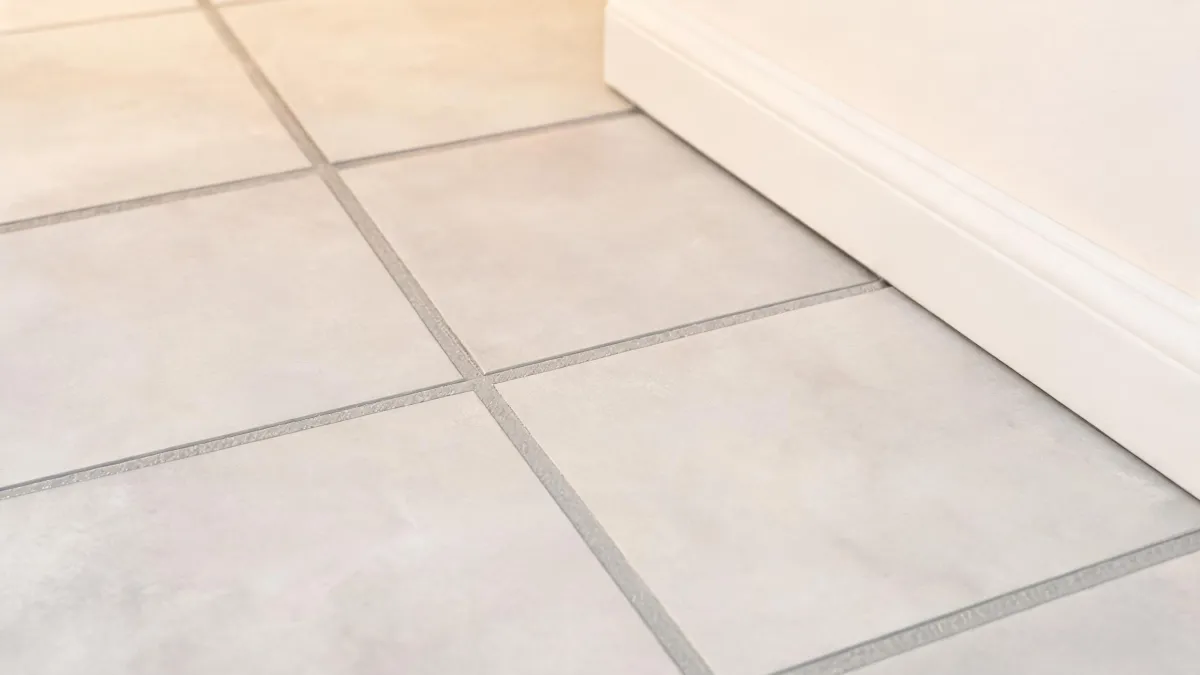
In March 2025, I stood in a half-finished retail lobby and watched the project inspector flip through a spec sheet. He stopped at one line, looked up, and said, “This tile doesn't meet the DCOF requirement for commercial entryways.”
That moment changed how I think about wholesale purchasing. I've been a procurement manager at a 40-person commercial construction firm for six years, managing a building material budget of roughly $2.1 million annually. I've negotiated with 20+ suppliers, tracked every invoice in our cost system, and built TCO models for everything from tile adhesive to precast concrete. But in all that time, I'd treated compliance verification as someone else's job. It isn't.
The Bid That Looked Too Easy
Back in January, we won a retail fit-out. The architect's spec called for 9,600 square feet of porcelain tile in the entry, corridors, and restrooms, plus precast concrete sills for the exterior windows. The designer liked the marble-look Marazzi collections, and I'd used Marazzi ceramic tile on two earlier projects, so it seemed like a safe choice.
I sent the product list to three commercial tile wholesale distributors. One quoted $0.84 per square foot for a product that didn't match the spec. Another came in at $0.97. The third offered $0.89 per square foot on the exact Marazzi series we needed, with a lead time of five weeks. I went with the third.
I also placed a precast concrete wholesale order with a local supplier that had done work for us before. The quote was $34 per lineal foot for the sills, and it included delivery. I signed after a quick skim (bad habit, I know).
Here's where I messed up. I assumed “same as last project” meant identical specifications. The two earlier projects had used matte-finish Marazzi tile. This time, the architect chose a polished finish because it matched the interior rendering better. I didn't check the technical data sheet. I didn't ask the distributor for the DCOF rating. I just saw the same series name and moved on.
The Inspector's Simple Question
Delivery went smoothly. The tile arrived in mid-February on pallets, stacked and wrapped. The precast sills showed up the same week. Our install crew started on the corridor floors. I remember thinking, “This is going to be painless.” That was naive.
The inspection happened on the first Monday of March. The inspector asked for the tile's coefficient of friction data, specifically the dynamic coefficient (DCOF) for level commercial interior floors. I pulled up the spec sheet on my phone. My stomach dropped when I saw the number: 0.32.
Per the Tile Council of North America handbook (2024 edition), the recommended DCOF for level commercial interiors is 0.42 or higher. The polished finish looked great in the rendering, but the gloss reduced traction. We'd ordered 3,200 square feet of that tile for the entryway and restrooms. Every one of those tiles was non-compliant.
“I didn't fully understand why the finish mattered until that moment,” I told the inspector. “I assumed the series was the series.” He shrugged. “The finish changes the surface. The surface changes the test.”
The fix wasn't cheap. We had to remove the tile that the crew had already set, order the same series in a honed finish (which had a DCOF of 0.45), and pay for expedited shipping. The replacement arrived in 12 days. The rework, including labor and the unused adhesive, came to roughly $8,400 — about 17% of the project's material budget.
The Precast Surprise
While we were dealing with the tile, the precast sills created their own headache. The supplier's shop drawings listed a concrete compressive strength of 4,500 psi, but our structural engineer's spec called for 5,000 psi. When I emailed the supplier, they said, “We quoted our standard mix. You didn't specify 5,000 psi in the PO.”
I pulled up the purchase order. They were right. I had signed the PO with a note that said “per attached pricing,” but I'd attached the quote, not the full project specification. That's another assumption failure: I expected the supplier to read my mind and cross-check the structural drawings. Instead, they built what I ordered.
Honestly, I'm not sure who was more at fault. The supplier could have asked about the strength requirement at bid time. But I could have sent them the project spec instead of just a product list. My mistake didn't show up until the 28-day cylinder test came back, and by then the sills had already been trucked to the site. We ended up pouring new sills with a 5,000 psi mix, which cost $3,900 and delayed the exterior work by another week.
Building the 12-Point Checklist
After those two failures, I sat down with our project engineer and built what I call the material compliance checklist. It's not fancy. It's a 12-point list I run through before any purchase order goes out. The key items are:
- Porcelain tile compliance requirements: verify water absorption ≤0.5% (per ANSI A137.1), confirm the DCOF matches the installation area (per TCNA guidelines), and check that the finish type is exactly what the spec calls for.
- Precast concrete: verify the compressive strength (ASTM C39) on the actual mix design, not a generic mill sheet, and confirm dimensional tolerances against the shop drawings.
- Both: send the full project specification to the supplier in the RFQ, not just a product name, and ask them to confirm compliance in writing.
The checklist felt like overkill at first. Our project engineer laughed and called it “the 12-step program.” But in July, it proved itself.
The $8,000 Save
We were ordering 4,400 square feet of Marazzi porcelain tile for a medical office floor. The DCOF met the requirement, but the water absorption test report from the distributor showed 0.6% — above the ANSI A137.1 threshold for porcelain tile. If we'd installed it, the tile could have had freeze-thaw issues at the entrance, and the warranty probably would've been void.
We switched to a different surface in the same series, got the correct report, and went ahead. The change took one phone call and about ten minutes. The potential rework would've been at least $6,000 plus the disruption of a medical office schedule.
“The 12-point checklist I created after the March disaster has saved us an estimated $18,000 in potential rework this year,” I wrote in my quarterly procurement review. “It cost me five minutes per order to run.”
The Lesson
I've never fully understood why some procurement teams treat spec verification as an afterthought. Maybe it's because getting a good price feels like the hard part, and checking a PDF feels like admin work. But in this industry, the cheapest thing you can buy is the five minutes it takes to read the spec sheet.
The most expensive sentence in construction is “I assumed it was the same.” That phrase has cost me more than any supplier markup. Now it's banned in our office. We verify, we document, and we confirm in writing.
“5 minutes of verification beats 5 days of correction.”
So if you're buying wholesale tile, precast concrete, or any material where the technical specs affect health and safety, send the full project spec with the RFQ. Ask the supplier to confirm, in writing, that their product meets every line item. And if anyone says “it's the same as last time,” check anyway. That's the moment where prevention is still cheap, and correction starts getting expensive.
Prices, standards, and recommendations referenced as of March 2025. Verify current DCOF thresholds, ANSI A137.1 requirements, and local building codes before making purchasing decisions.