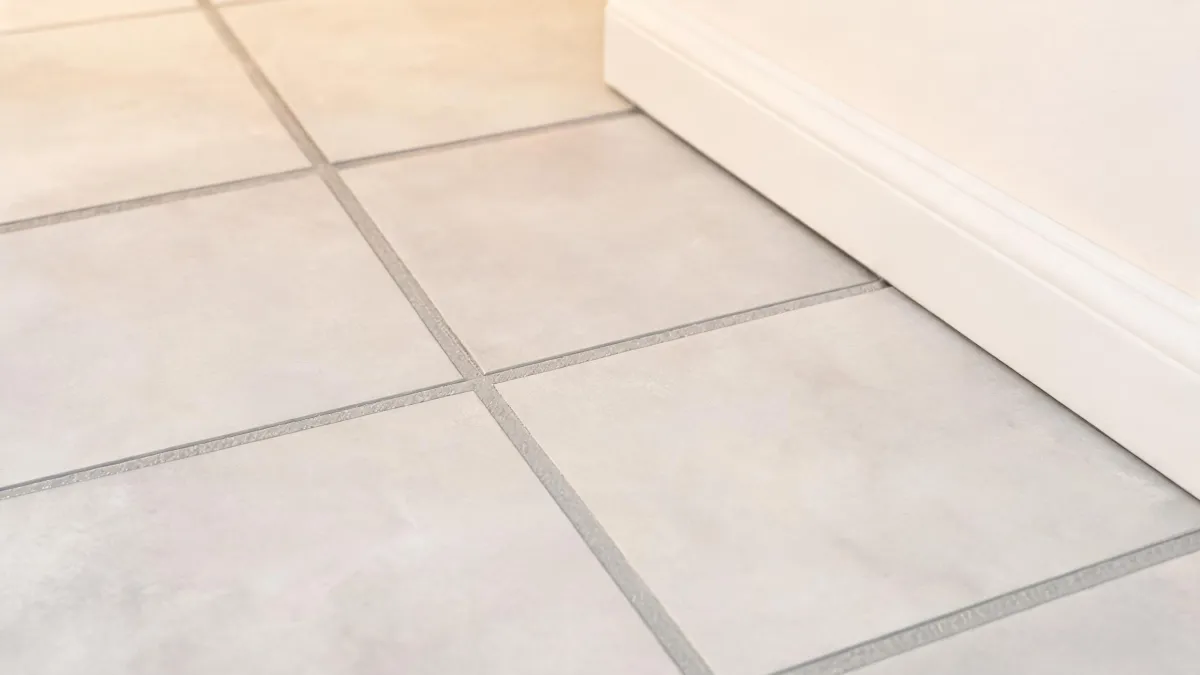
I rejected 14% of first deliveries in 2024. Not because the materials were defective—because they didn't match the specification we'd confirmed on the purchase order. On a commercial building project, that's the same failure.
Here's the conclusion up front: when you're specifying Marazzi tiles, concrete blocks, or masonry brick, treat the technical data sheet as the contract. The sample board is for inspiration. The spec sheet is for procurement. Most quality failures I see aren't manufacturing defects. They're specification mismatches caught too late to matter.
This is what I review on my dock, and what you should verify before you sign the order.
Why I'm qualified to talk about this
I'm the quality and brand compliance manager at a building materials distributor. I review every truckload before it reaches our customers—roughly 200 unique shipments a year covering tile, adhesives, concrete block, and brick. In 2024, I rejected 11% of first deliveries for spec discrepancies: wrong PEI ratings, off-color lot variations, and moisture content that didn't match the product data sheet.
Each rejection costs someone time, freight, and schedule. My job is making sure that "someone" isn't our customer.
Marazzi tile: the checks that matter
Marazzi's design range is genuinely strong. The marble-look porcelain, wood-effect planks, hexagon, and terrazzo collections get specified a lot for commercial and hospitality interiors. And rightly so—they're visually consistent, which is harder to pull off than it looks.
But here's the counterintuitive part: the visual quality rarely causes problems. The problems come from the invisible specs.
PEI rating vs. traffic. PEI class tells you surface durability. Class III handles moderate residential traffic. Class IV is for commercial spaces—lobbies, retail, offices. Class V is for heavy commercial zones. I've seen a restaurant specify Class III tile for an entryway. Six months in, the finish was wearing thin. The tile wasn't defective. It was misapplied.
Water absorption. Porcelain absorbs less than 0.5% moisture, which is what makes it work for exterior and wet applications. Ceramic absorbs more, and won't survive freeze-thaw climates. Marazzi makes both. The word "porcelain" gets thrown around loosely, so I verify the absorption number on the spec sheet. I don't rely on the product name.
Coefficient of friction. Commercial flooring in wet or high-traffic zones typically needs a COF of 0.42 or higher per ANSI A137.1. "Slip resistant" means nothing without the test data. I request the technical sheet for every tile SKU before it gets specified.
Rectified vs. non-rectified edges. Rectified tiles are precisely cut after firing, giving uniform edges that allow tight grout joints—1/16" or less. Non-rectified tiles need wider grout lines to hide variation. Architects love the clean monolithic look rectified tile delivers, but it has zero tolerance for uneven substrate. That's an installation reality the contractor should hear before the order, not after.
Lot consistency. This one burns more people than any other. Tile is manufactured in firing runs, and slight color variation between production lots is normal. If a project is phased, I won't release a second shipment from a different lot without checking the color hold. On a recent project, a client ordered Marazzi tile in two batches two months apart. The color was close—but close isn't good enough for a continuous wall. We caught it at the warehouse and reordered before the installer got near it.
And one more thing on claims: if a product is marketed as "recycled content" or "eco-friendly," I want the backup documentation. Per FTC Green Guides (ftc.gov), environmental claims have to be substantiated, not just printed on a brochure. For LEED projects, that documentation matters twice as much.
Reading a concrete blocks catalog
Concrete block isn't glamorous, but it's bearing the load. When I review a concrete blocks catalog, I look for three numbers:
ASTM C90 compliance. C90 is the standard for load-bearing concrete masonry units. It sets minimum requirements for compressive strength, absorption, and dimensional tolerance. If a block doesn't state C90, I won't spec it for structural use.
Compressive strength. For load-bearing walls, I require 1900 psi minimum per ASTM C90. Higher loads, shear walls, or multi-story buildings—that goes up, sometimes to 3000+ psi. The strength is printed on the block face and on the data sheet. Match it to the structural engineer's requirement.
Density classification. Lightweight block—typically 85 to 110 pcf—has different fire ratings, sound transmission properties, and fastener capacity than normal weight block at 125+ pcf. The catalog should state density clearly. Need fire-resistance ratings? You'll need UL assembly data, not just the block spec.
The field check matters too. I catch chipped corners and moisture damage on arrival. In masonry, a cracked corner isn't cosmetic. It's a structural weak point.
Masonry brick specification guide
Brick looks simple. I've had contractors order "regular red brick" and expect it to survive a northern climate. That's what weathering grades are for.
ASTM C216 is the standard for facing brick, with three grades: SW (severe weathering), MW (moderate), and NW (negligible). In any climate with freeze-thaw cycles, my minimum is Grade SW. SW brick has a maximum absorption rate of 17% and is designed to resist moisture penetration and freeze-thaw damage.
ASTM C62 covers building brick, where appearance matters less but structural performance matters just as much. Same weathering grades apply.
The specification mistake I see most often: thin brick veneer for exterior use without checking the freeze-thaw rating. Thin brick has different absorption characteristics than full brick. If the manufacturer doesn't publish freeze-thaw test data, don't assume it's fine.
What a commercial tile distributor should be doing for you
A good distributor is more than a warehouse with inventory. This is where the supply chain either works or falls apart. Here's what separates a transactional vendor from a real supply partner:
- They verify manufacturer lot numbers and print them on the packing slip.
- They hold cut samples for color approval before the full order releases.
- They provide current spec sheets for every SKU, without you asking twice.
- They flag mismatches between tile spec and adhesive spec before you order, not after it fails.
The adhesive point deserves emphasis. Large-format porcelain tile needs a different mortar than standard ceramic—usually a medium-bed mortar designed for large and heavy tile. The tile's spec sheet should indicate what the manufacturer recommends. If it doesn't, I ask. The nicest Marazzi tile in the world will fail if it's bonded with the wrong setting material.
So if your distributor can't tell you the PEI rating of the tile they shipped, or the absorption rate of the brick they quoted, that's a red flag. Not because they're withholding information—because that data determines whether the material survives its first winter.
Why does this matter? Because the purchase order is the last clean checkpoint you get. Once the material is on-site and the installer starts unboxing, every fix gets exponentially more expensive. Distributors who flag these issues ahead of time save their clients real money.
Where this advice doesn't apply
Residential projects get a lighter version of these checks. A single-family bathroom isn't going to need freeze-thaw data or UL fire ratings. Context matters; that's not an excuse to skip verification entirely, just a reason to prioritize what matters.
I'll also be honest about a decision that kept me up for two weeks last year. We were choosing between Marazzi and an alternative supplier for a large commercial order. The alternative offered a lower unit price; Marazzi offered consistent lot quality and a supply chain that covered both tile and masonry from one source. We went with Marazzi, and the reasoning was simple: for a project that size, a bad lot means a schedule disaster. But if the project had been smaller, I might have chosen differently. Price has its place. It just isn't the first thing I check.
One last note, for full transparency: my experience is based on roughly 200 commercial orders a year in North America. If you're working with international sourcing, unusual product categories, or fully custom specs, your verification steps will need to go deeper than this list. In the end—and this does not change regardless of where you source from—the discipline is the same: verify the spec, document the lot, confirm the grade. Before the truck arrives, not after.